
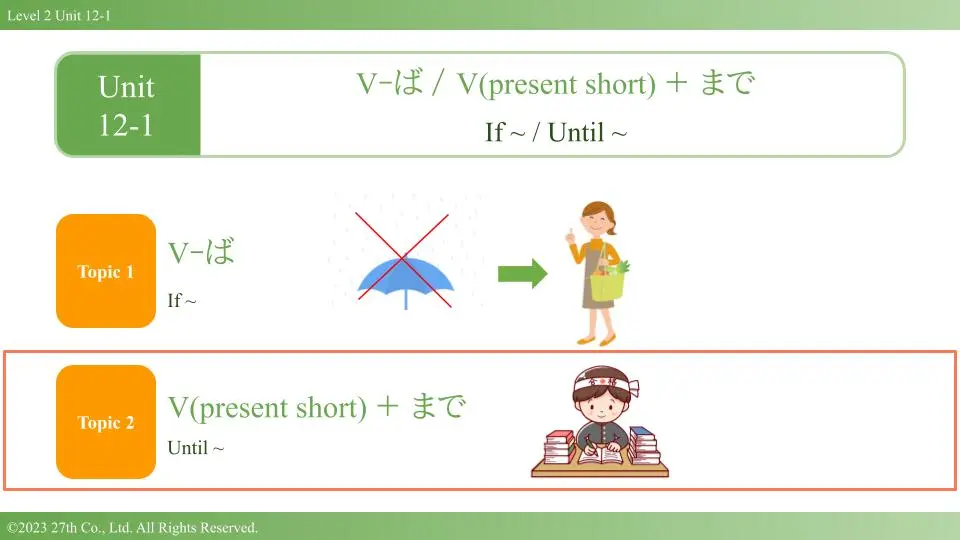
V (present short) + まで: How to Say “Until …” in Japanese
Introduction Want to say “I’ll wait until it stops raining” or “I’ll keep working hard until I pass the exam?” Use V (present short) + まで to... Read more.
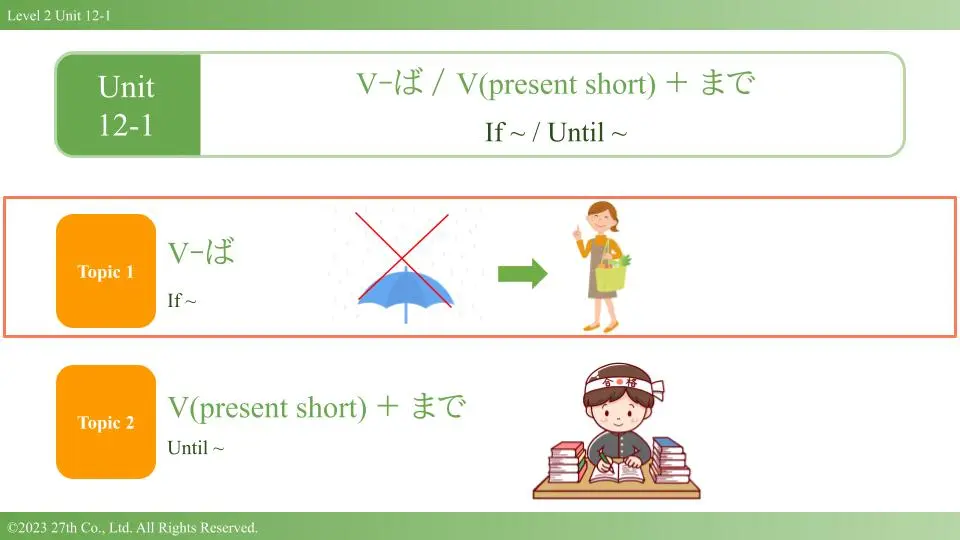
V-ば: If X is the case, then Y is/will be in the case
Introduction V-ば expresses a general “If X, then Y” relationship. It’s a core conditional you’ll use for rules, tendencies, and good-result expectations... Read more.
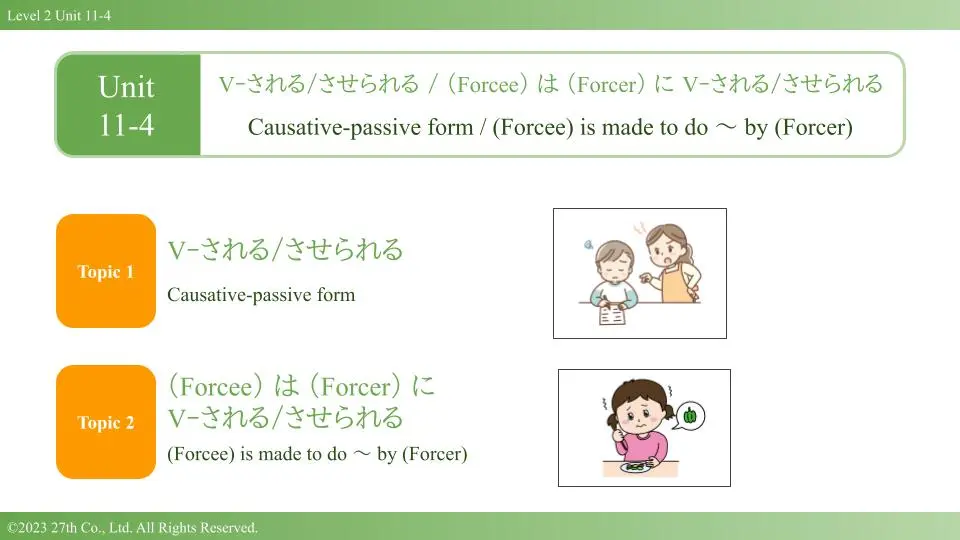
Causative-Passive in Japanese: V-される/させられる and “(Forcee) は (Forcer) に V-される/させられる”
Introduction When you want to say you were made/forced to do something—like “I was made to study by my parents”—Japanese uses the causative-passive. You’ll... Read more.
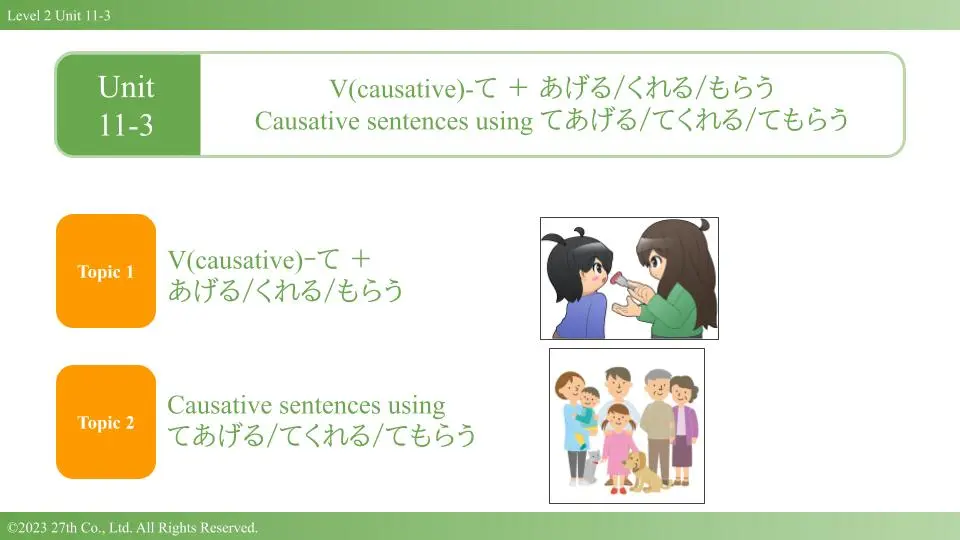
Let Someone Do in Japanese: Causative + てあげる/てくれる/てもらう
Introduction Want to say “I let my daughter eat cake,” “My dad let me drive,” or “I was allowed to keep a pet”? At N4 level, you can express this neatly... Read more.
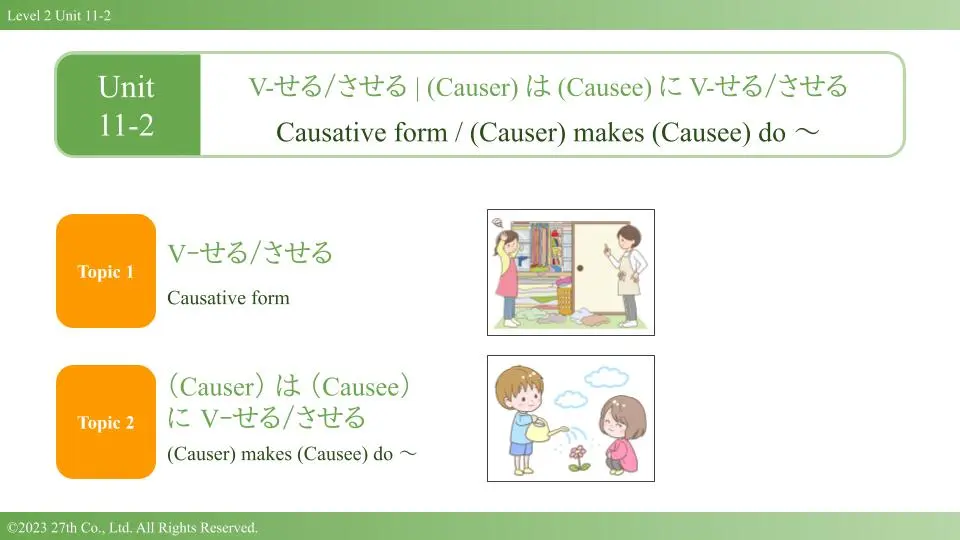
Japanese Causative: V-せる/させる & “(Causer) は (Causee) に V-せる/させる”
Introduction Want to say “I made my brother clean his room” or “My parents let me live alone” in Japanese? You’ll use the causative: This form covers both... Read more.

Imperative Form in Japanese (命令形)
Introduction Need to say “Hurry up!”, “Stop!”, or “Sit here!” in Japanese? That’s the imperative form (命令形)—a very strong command used sparingly... Read more.
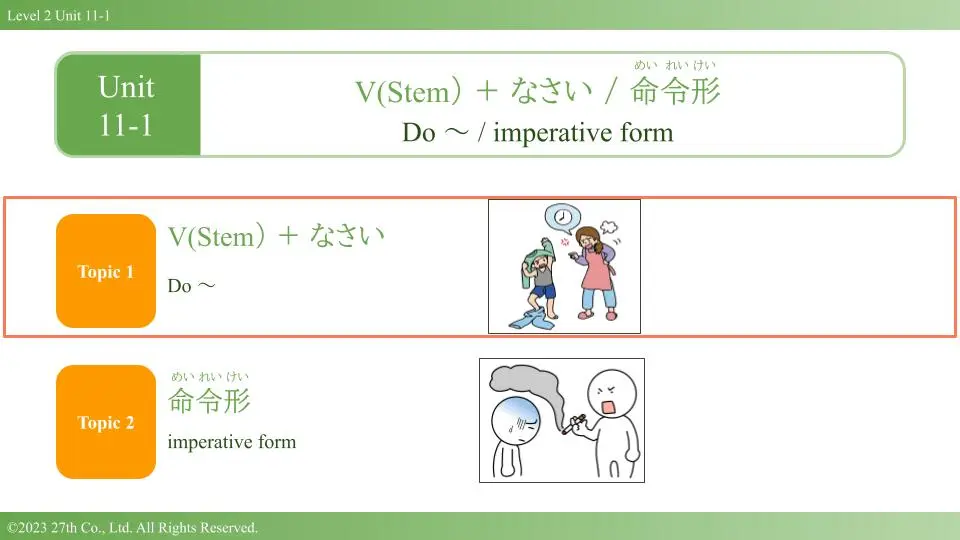
V-stem + なさい: How to Give Firm “Do ~” Commands in Japanese
Introduction Want to say “Clean up now,” “Study hard,” or “Go to bed” in Japanese? The pattern you need is V-(stem) + なさい. It’s a direct, firm... Read more.
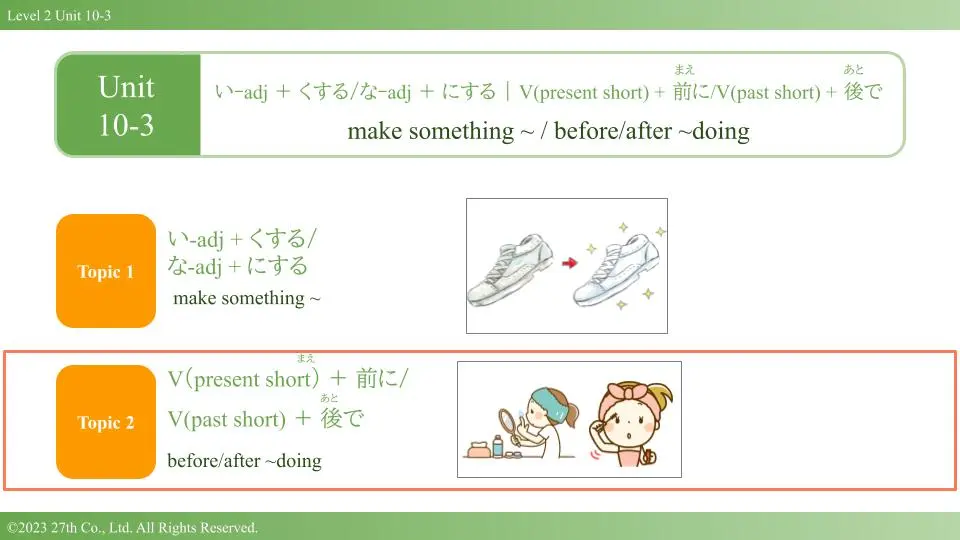
Before/After in Japanese: V (present short) + 前に / V (past short) + 後で
Introduction Want to say “before I sleep, I brush my teeth” or “after I studied, I came to Japan”? Use these two super-handy patterns: These are the standard... Read more.
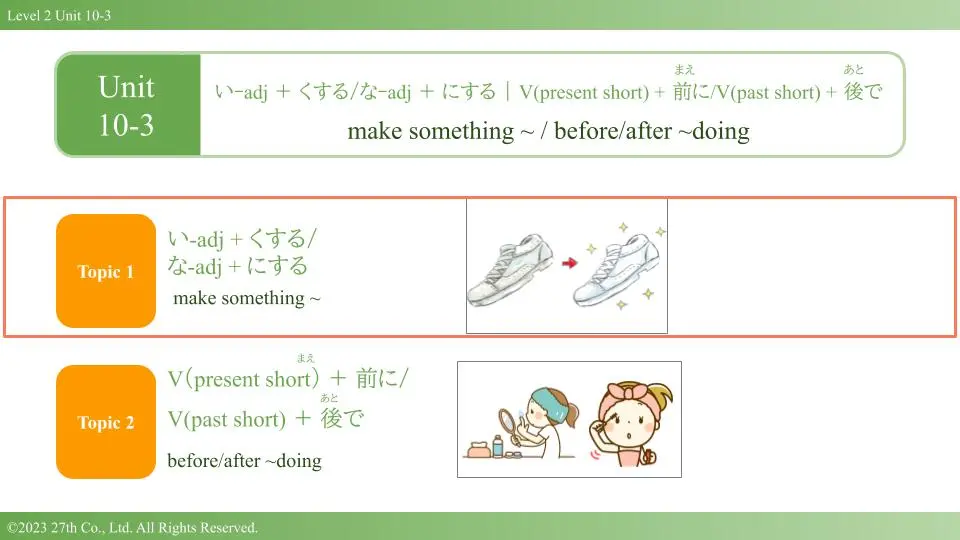
Make It ~ in Japanese: い-adj + くする / な-adj + にする
Introduction Want to say “Make the room brighter,” “Make the soup spicier,” or “I made my hair shorter”? Use い-adj + くする and な-adj + にする... Read more.
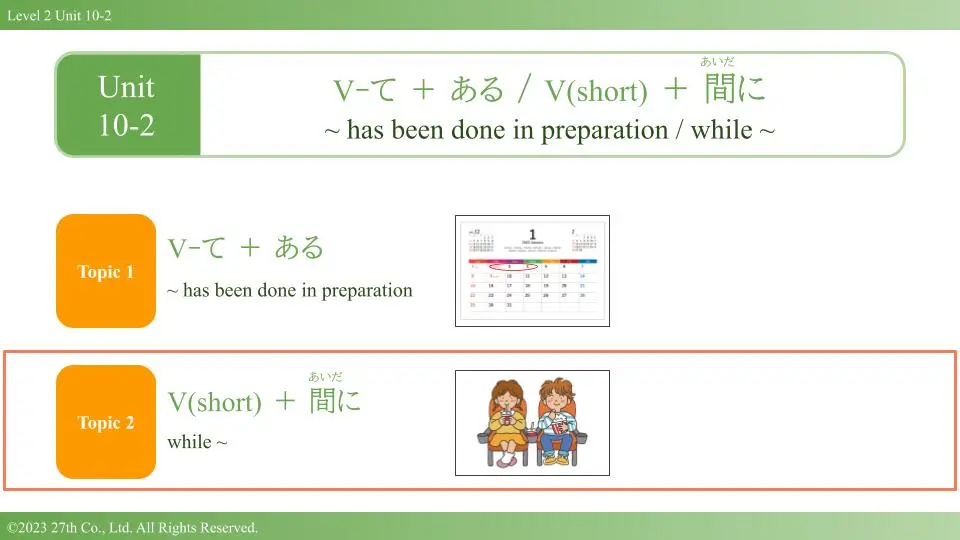
V (short) + 間に (aida ni): How to Say “While / During …” in Japanese
Introduction Want to say “While I was sleeping, there was an earthquake” or “I want to travel while my friend is in Japan”? Use (short/plain form) + 間に... Read more.