

Mottainai: The Japanese philosophy of respecting resources/Guilt towards wasting
Have you heard of the Japanese word mottainai (もったいない, pronounced “moh-tai-nai”)? It captures the feeling that it’s a shame to waste anything valuable—food,... Read more.
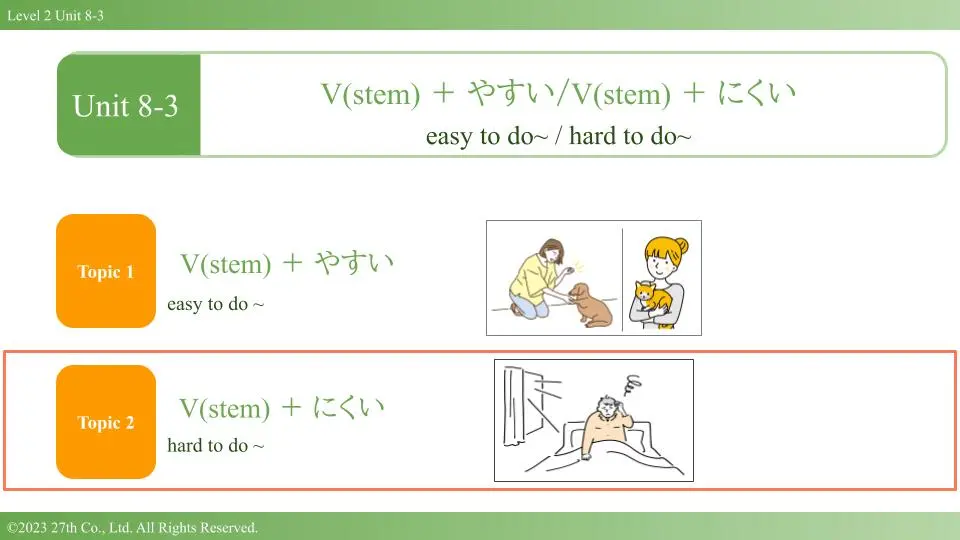
V-stem + にくい: Beginner’s Guide to Saying “Hard to Do” in Japanese
Introduction Want to say “These sneakers are hard to put on” or “That company was hard to work at”? Use V-stem + にくい, a handy pattern that describes... Read more.
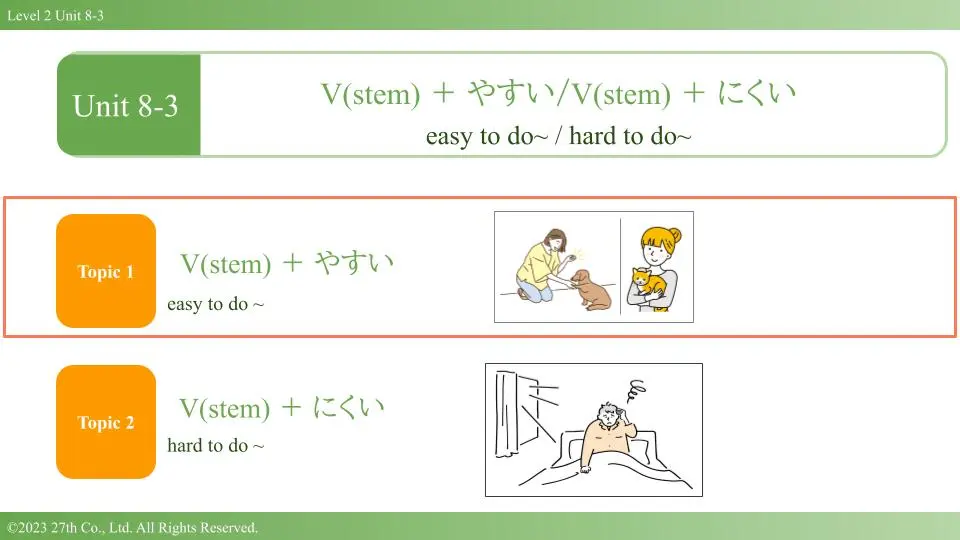
V-stem + やすい: Beginner’s Guide to Saying “Easy to Do” in Japanese
Introduction Want to say “This phone is easy to use” or “The teacher was easy to talk to”? Use V-stem + やすい, a super-handy pattern that describes how... Read more.
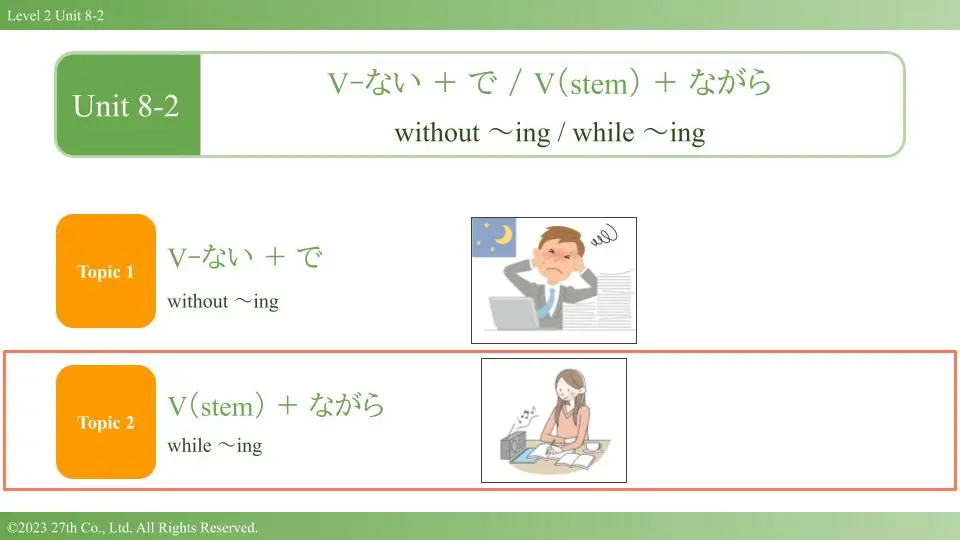
V-stem + nagara (〜ながら): Beginner’s Guide to Saying “While ~ing” in Japanese
Introduction Want to say “I study while listening to music” or “Kenta is cooking while singing”? Use V-stem + ながら. This pattern links two actions that... Read more.
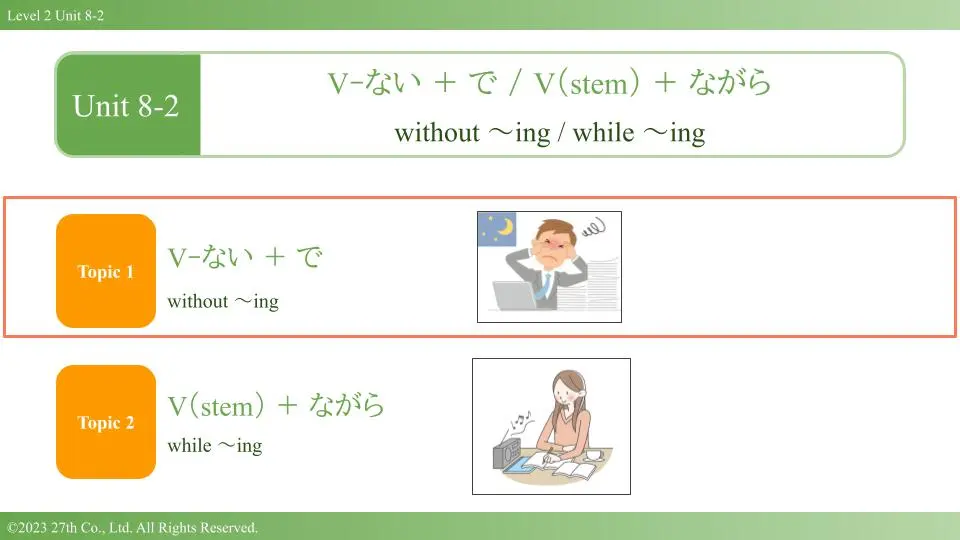
V-nai de (~ないで): Beginner’s Guide to Saying “Without ~ing” in Japanese
Introduction Want to say “I went out without an umbrella” or “He sleeps without turning off the lights”? The core beginner pattern is V-ないで. It attaches... Read more.
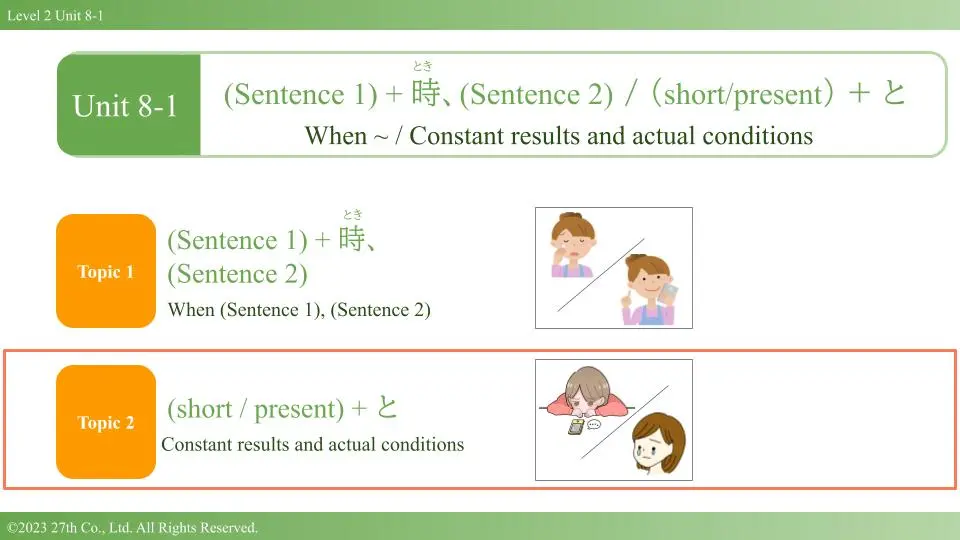
short-present + と: Beginner’s Guide to “Whenever A Happens, B Happens” in Japanese
Introduction Want to say “Whenever I drink coffee, I can’t sleep” or “When spring comes, cherry blossoms bloom”? Japanese uses Event A (short form, present)... Read more.
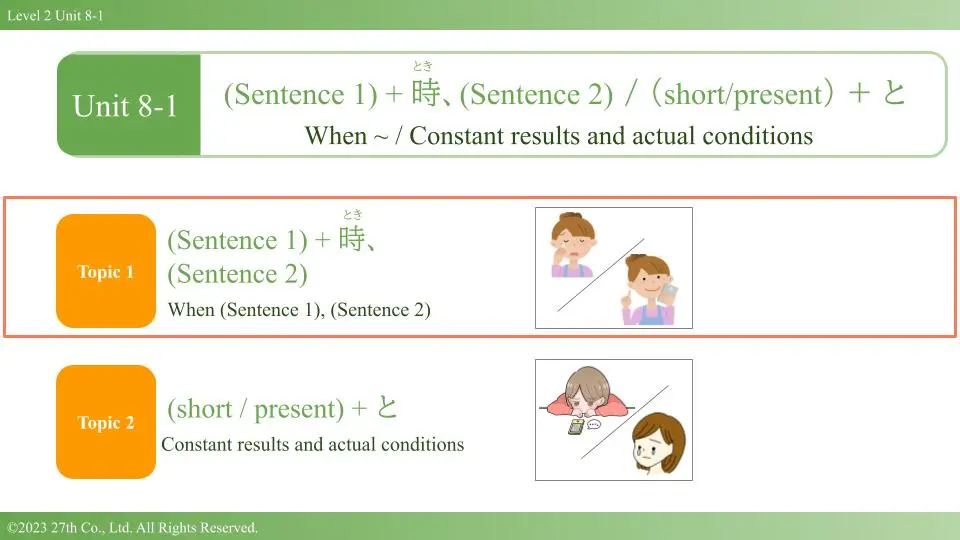
toki (時): Beginner’s Guide to Saying “When (Sentence 1), Sentence 2” in Japanese
Introduction Need to say “When I study, I listen to music” or “When I went to Japan, I skied”? Use the clause pattern (Sentence 1) + 時(とき), (Sentence... Read more.
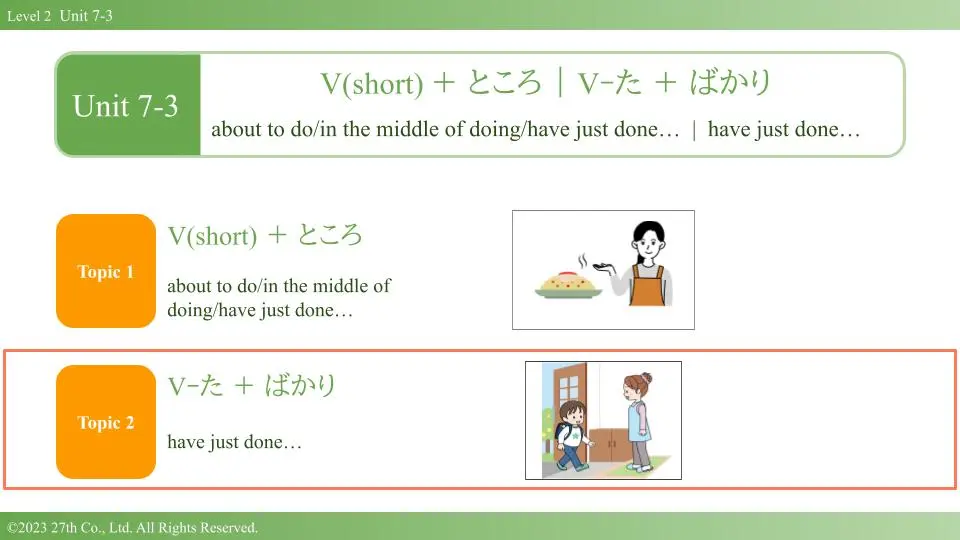
V-ta bakari (V-たばかり): Beginner’s Guide to Saying “Have Just …” in Japanese
Introduction Need to tell someone you just arrived, just ate, or just started a new job? The grammar you want is V-た + ばかり. It means “have just done …,”... Read more.
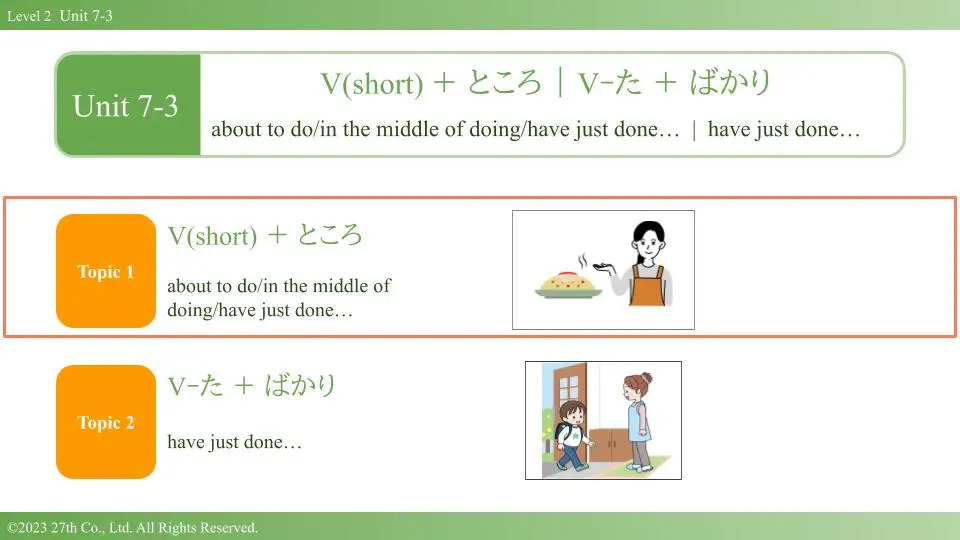
V-tokoro (V + ところ): Beginner’s Guide to Saying “About to / In the Middle of / Have Just …” in Japanese
Introduction Want to say “I’m about to leave,” “I’m in the middle of cooking,” or “I’ve just finished homework” in Japanese? All three ideas use... Read more.
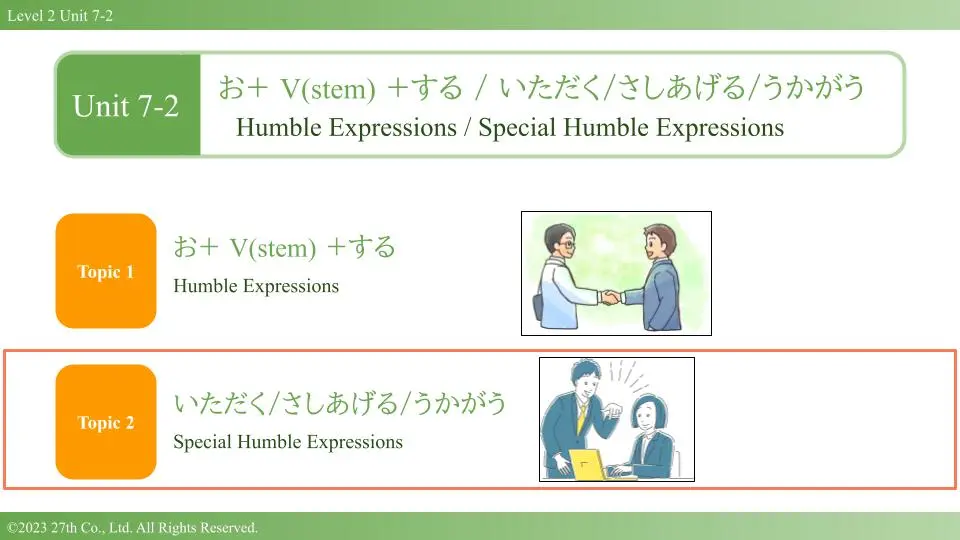
itadaku, sashiageru, ukagau: Special Humble Expressions (Kenjougo) in Japanese
Introduction You already know you can humble your own actions with お + verb-stem + します. But three everyday actions—receiving, giving, and visiting / asking—have... Read more.