
Nとして (N to shite) Meaning & Usage: “As N / in the role of N” in Japanese
Introduction Have you ever wanted to say “as a student,” “as a professional,” or “using something as a tool” in Japanese? For example: When you want... Read more.
Nにとって (N ni totte): For N / from N’s standpoint in Japanese
Introduction Have you ever wanted to say “For me…”, “From your standpoint…”, or “As far as students are concerned…” in Japanese? For example: When... Read more.
何といっても (nanto ittemo) — “Above all / undeniably”
Introduction Have you ever wanted to say, “No matter what, this is the #1 choice” in Japanese? For example: When you want to highlight the most important point... Read more.
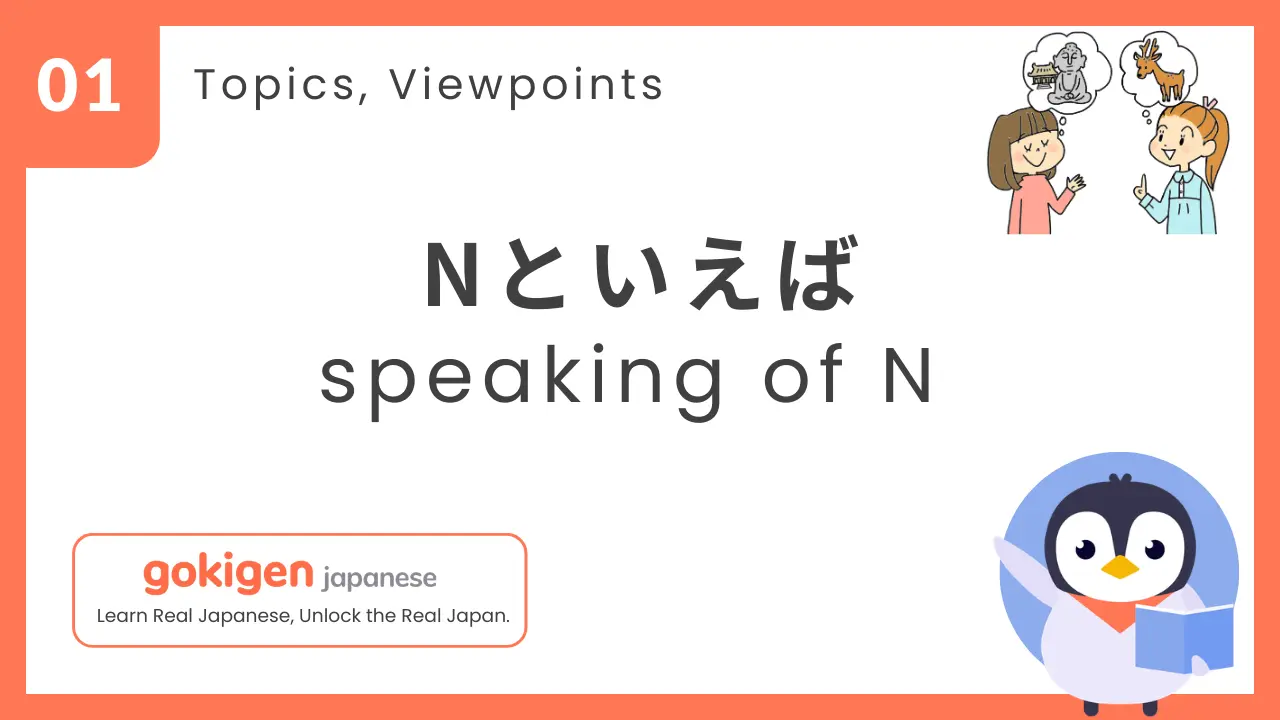
Nといえば (N to ieba): “Speaking of…” / “When you mention…”
Introduction Do you know the phrase Nといえば? It’s a natural way to react when someone mentions something and you want to connect it to a well-known image,... Read more.
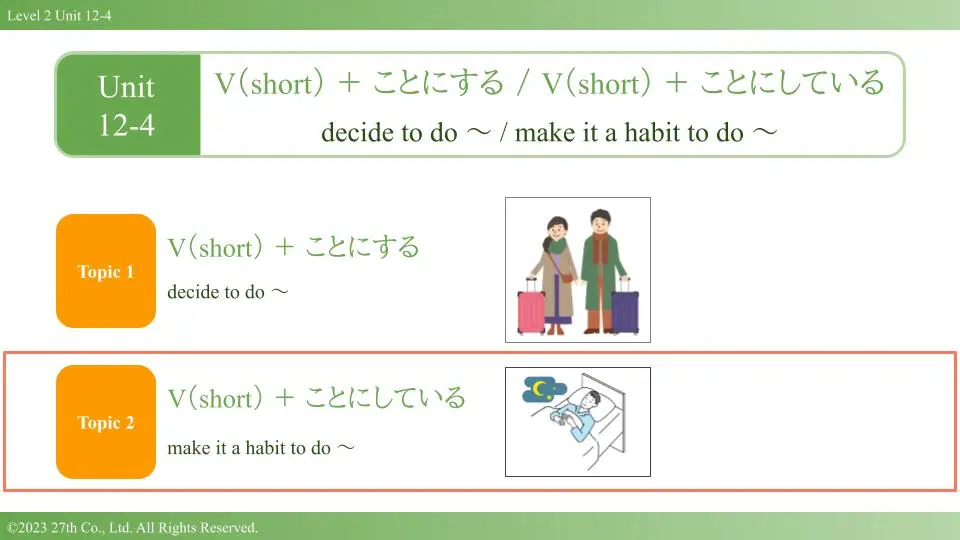
V (short) + ことにしている: How to Say “Make it a Habit to …”
Introduction Do you know how to express ‘‘do as a regular practice’’? Use V (short) + ことにしている to say you make something a habit/rule for yourself.... Read more.
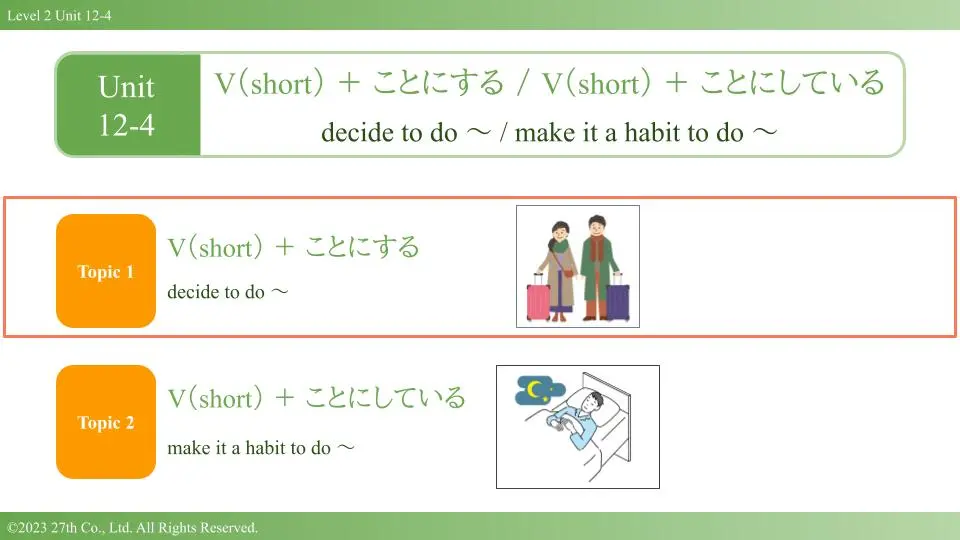
V (short) + ことにする: How to Say “Decide to do …” in Japanese
Introduction Do you know how to say ‘‘decide to do something’’? For example: Use V (short) + ことにする to say you decide to do something. It expresses... Read more.
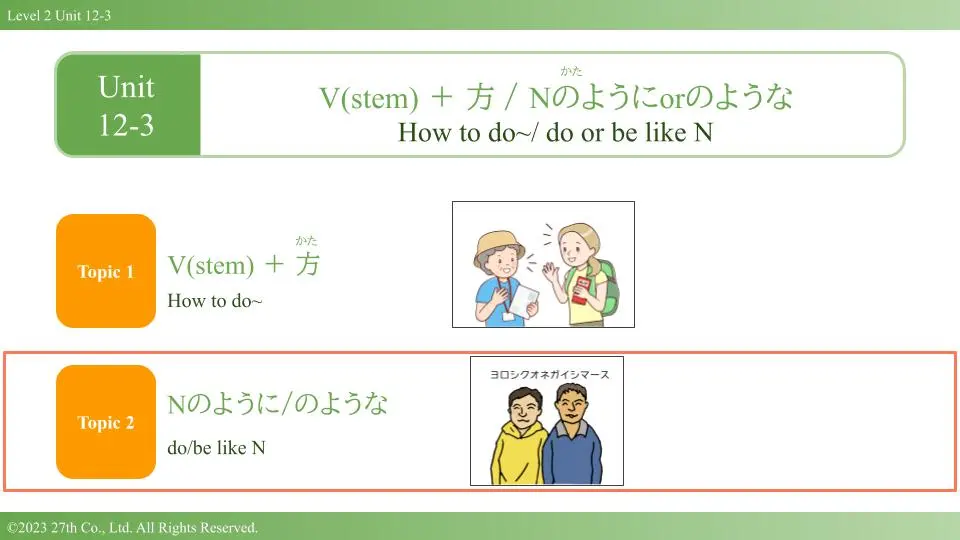
N のように / N のような: How to Say “Like N / Similar to N” in Japanese
Introduction Do you know how to express similarity or likeness? Use N のように and N のような to say something is like N or similar to N. 1. Meaning &... Read more.
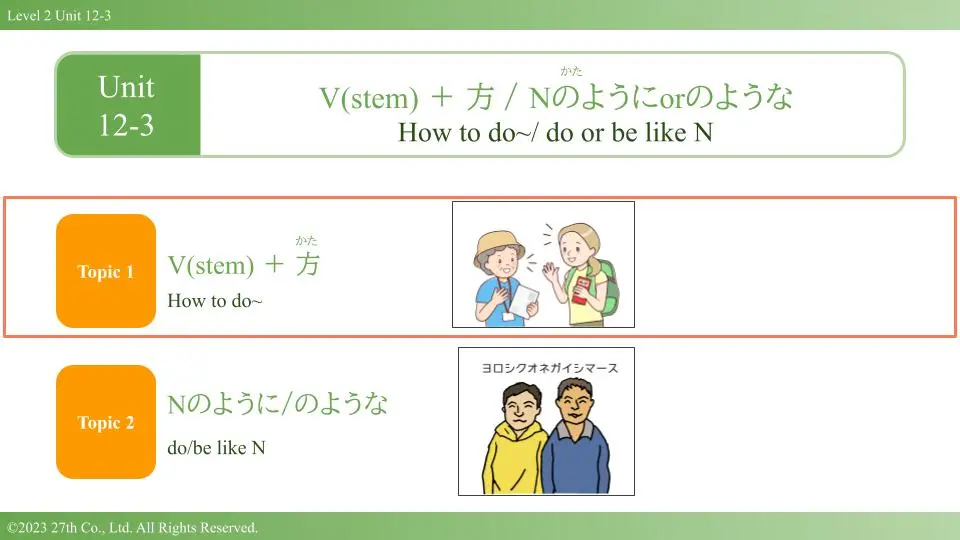
V-stem + 方 (kata): How to Say “How to do ~” in Japanese
Introduction Do you know how to express the idea of “how to do” something or the “way of doing” something in Japanese? V-stem + 方 (kata)... Read more.

V/adj-て + も: How to Say “Even If …” in Japanese
Introduction Do you know how to express the idea of “even if” or “regardless of”? For example, “Even if it’s hot, I will go out” or... Read more.
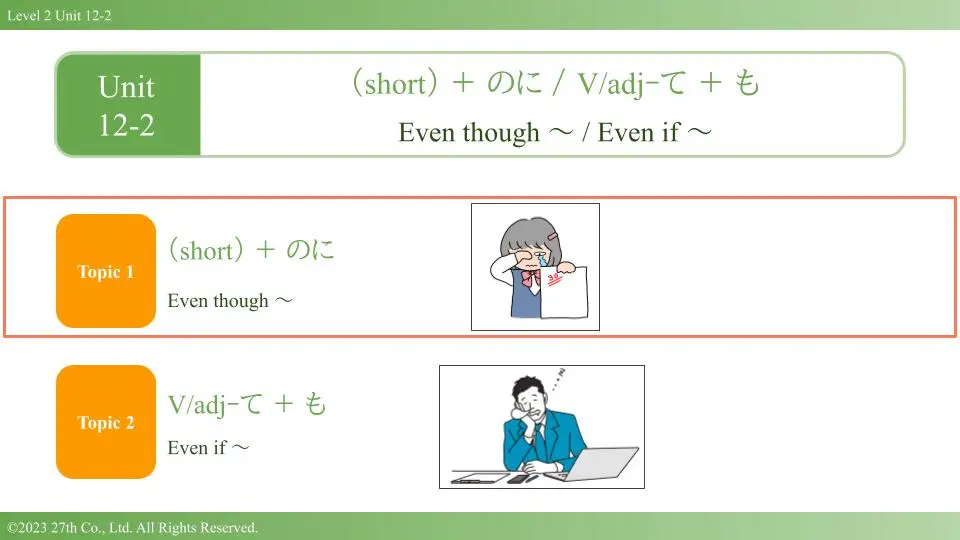
(short) + のに: How to Say “Even Though” in Japanese
Introduction Do you know how to express the idea of “even though” or “despite”? For example, “Even though I studied a lot, I got a... Read more.