
Video
Let’s watch this short video for a quick overview.
Source: gokigen japanese official YouTube Channel
Introduction
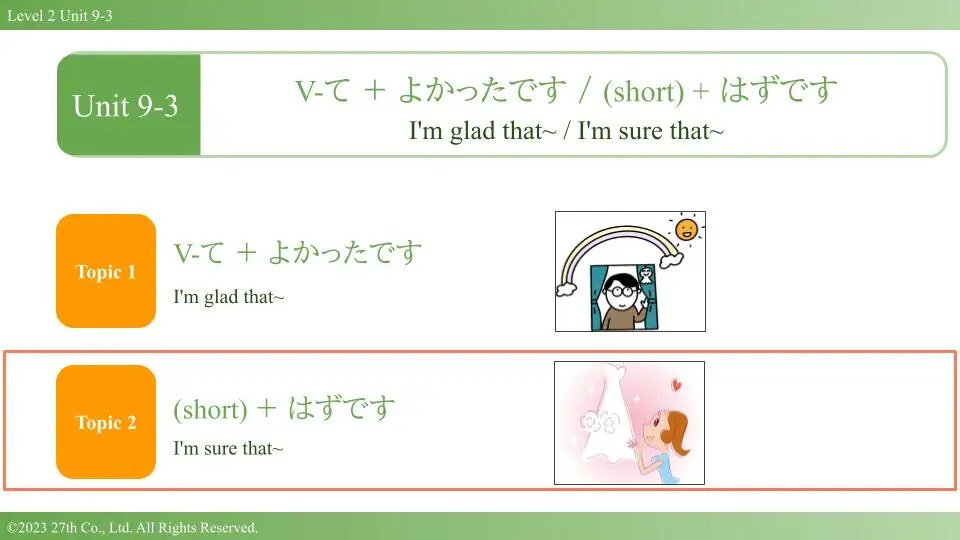
Want to say “I’m glad I made it” or “I’m glad it didn’t rain”?
Use V-て + よかったです.
It expresses relief, satisfaction, or gratitude about something that happened (or didn’t).
We’ll keep this beginner-friendly and practical with patterns, examples, and quick drills.
1. Meaning & Use
V-て + よかったです = “I’m glad (that) …”

バスに間に合ってよかったです。
I’m glad I made it to the bus.

雨が降らなくてよかったです。
I’m glad it didn’t rain.
Use it to comment on a past event with relief or satisfaction.

2. How to Form It
Put the verb in て-form, then add よかったです.
| Verb | て-form | よかったです form |
|---|---|---|
| 会う (to meet) | 会って | 会ってよかったです |
| 間に合う (to make it in time) | 間に合って | 間に合ってよかったです |
| 食べる (to eat) | 食べて | 食べてよかったです |
| する (to do) | して | してよかったです |
| 来る (to come) | 来て | 来てよかったです |
For negative, change the short negative 〜ない to 〜なくて, then add よかったです.
| Verb | て-form | よかったです form |
|---|---|---|
| 行かない (to not go) | 行かなくて | 行かなくてよかったです |
| 寝ない (to not sleep) | 寝なくて | 寝なくてよかったです |
| しない (to not do) | しなくて | しなくてよかったです |
| 来ない (to not come) | 来なくて | 来なくてよかったです |
If you want to review て-forms and short negative forms, please read these articles:
- How to Use te kudasai(〜てください) in Japanese | Polite Request Form Explained
- How to Use Japanese Short Forms (Plain Forms) for Casual Conversations
3. Example Sentences

毎日が楽しいです。結婚してよかったです。
Every day is fun. I’m so glad I got married.

体の調子が良くなりました。病院に行ってよかったです。
I feel much better now. I’m glad I went to the hospital.

今日はバーベキューをします。晴れてよかったです。
We’re having a barbecue today. I’m glad it’s sunny.

納豆がおいしかったです。食べてよかったです。
The natto was delicious. I’m glad I ate it.

そのパーティーはつまらなかったそうです。参加しなくてよかったです。
I hear that party was boring. I’m glad I didn’t go.
4. Key Distinction: -te yokatta vs. -ba yokatta
Crucial Difference: Gladness for Reality vs. Regret for a Different Past
These two patterns look similar but express opposite feelings about the past.
Mastering this is key to sounding natural.
V-て よかった (I’m glad I did…)
Expresses relief or happiness about something that actually happened.
It’s a comment on reality.
Example:
パーティーに行ってよかった。
I’m glad I went to the party. → I actually went, and it was good.
V-ば よかった (I wish I had done…)
Expresses regret about something that did not happen (or happened differently).
It’s a comment on a hypothetical, unreal past.
Example:
パーティーに行けばよかった。
I wish I had gone to the party. → I didn’t go, and I regret it.
5. Practice Time!
Transform the cue into a V-て/V-なくて + よかったです sentence.
| Cue | Model answer | Meaning |
|---|---|---|
| 晴れる | 晴れてよかったです。 | I’m glad it cleared up. |
| 行く | 行ってよかったです。 | I’m glad I went. |
| 間に合う | 間に合ってよかったです。 | I’m glad I made it in time. |
| 来る | 来てよかったです。 | I’m glad I came. |
| 忘れる(negative) | 忘れなくてよかったです。 | I’m glad I didn’t forget. |
| 参加する(negative) | 参加しなくてよかったです。 | I’m glad I didn’t participate. |
| 食べる (negative) | 食べなくてよかったです。 | I’m glad I didn’t eat it. |
Your turn:
- 迷う(negative)
- 起きる
- 電車が遅れる(negative)
6. FAQ
- QWhat is the most important difference between 〜てよかった (-te yokatta) and 〜ばよかった (-ba yokatta)?
- A
-te yokatta is for REALITY. You are glad about something that actually happened. Example: あなたに会えてよかった。 (I’m glad I was able to meet you.) → We really met.
-ba yokatta is for REGRET. You wish something had happened differently. It’s about a hypothetical past. Example: あなたに会えればよかった。 (I wish I could have met you.) → We didn’t meet.
- QCan I use this grammar with adjectives, like “I’m glad it was delicious”?
- A
Yes, you can! The ending changes depending on the word type.
I-adjective: Change -i to -kute yokatta. Example: ラーメンがおいしくてよかった。 (I’m glad the ramen was delicious.)
Na-adjective / Noun: Add -de yokatta. Example: 祖母が元気でよかった。 (I’m glad Grandma is doing well.) / いい天気でよかった。 (I’m glad it’s nice weather.)
- QI heard someone say 会えてよかった (aete yokatta). What is the aete form?
- A
会えて (aete) is the te-form of the potential verb 会える (aeru), which means “to be able to meet.” Using the potential form with -te yokatta is very common and adds a nuance of “I’m glad I had the opportunity to…” or “I’m glad I was able to…”.
- このレストランに来られてよかった。 (Korarete yokatta) – I’m glad I was able to come to this restaurant.
- 日本語が話せてよかった。 (Nihongo ga hanasete yokatta) – I’m glad I can speak Japanese.
Conclusion
Now you can use V-て + よかったです to express natural relief/satisfaction—and the negative with 〜なくてよかったです when you’re glad something didn’t happen.
Keep practicing with everyday wins (“made it,” “found it,” “didn’t forget”), and this pattern will become second nature.