
Introduction
Have you ever wanted to say “I heard that it will rain tomorrow” or “So you mean the person in charge is changing, right?” in Japanese?
For example:
- How do you report information from a weather forecast, a doctor, or a coworker?
- How do you confirm what someone just said in a polite business conversation?
- What expression sounds more natural in formal speech than casual conversation?
When you want to report information or confirm someone’s message in a formal way, Japanese often uses …ということだ.
1. Meaning: What does …ということだ mean?
…ということだ has two main meanings.
It is often used in formal speech, especially in:
- business conversations
- announcements
- reports
- explanations
- customer service
Meaning 1: reported speech / hearsay
This use means:
- I heard that…
- according to…
It is used when you are passing on information you heard from another source.
This meaning is often similar to ~そうだ (I heard that ~ / They say that ~).
For example:
- 天気予報によると、明日は雨だということです(=明日は雨だそうです)。
According to the weather forecast, I heard that it will rain tomorrow.
Meaning 2: confirmation of what someone said
This use means:
- So you mean…
- So that means…
It is used at the end of a sentence with ね, especially when confirming instructions, requests, or important information.
For example: John is calling his boss to let her know he’ll be late.

すみません、会議に五分ほど遅れます。事故で電車が止まったんです。
Sorry, I’ll be about five minutes late for the meeting. The trains have stopped because of an accident.

五分ほど遅れるということですね。わかりました。
So that means you’ll be about five minutes late, correct? Got it.
This use is common in polite and business-like communication.
2. Formation
Meaning 1: hearsay / reported information
(Source + では / によると +) Plain-form sentence + ということだ
E.g., (専門家によると)物価は上がるということです。= (According to experts,) prices are set to rise.
The sentence before ということだ must be in the plain form, so 上がりますということです is unnatural.
Meaning 2: confirmation
Plain-form sentence + ということです+ね
E.g., 五分ほど遅れるということですね。= So that means you’ll be about five minutes late, correct?
The sentence before ということだ must be in the plain form, so 遅れますということですね is unnatural.
Grammar breakdown
- と (particle)
quotation particle; it marks the content being reported or confirmed - いう (verb)
literally means “to say” - こと (noun)
means “thing / matter” and turns the quoted content into a concept
So …ということだ literally has the feeling of: “the matter is that …”
In practice, it is best to learn it as a fixed pattern.
Casual Speech: ~ってこと (tte koto)
In casual conversations with friends or family, ということだ is often shortened to ってことだ (tte koto da) or just ってこと (tte koto).
- Friend A: ごめん、今日行けなくなった!
Sorry, I can’t make it today! - Friend B: え、つまり今日のパーティーはキャンセルってこと?
Wait, so you mean today’s party is canceled?
3. Useful Examples
A. Hearsay / reported information

天気予報によると、明日は雪が降るということです。
According to the weather forecast, it’s supposed to snow tomorrow.

専門家の話では、来年も物価は上がるということです。
According to experts, prices will go up again next year.

医者の説明では、お酒とたばこは控えたほうがいいということです。
According to the doctor’s explanation, it is better to avoid alcohol and cigarettes.

ABC商事のジョンさんから連絡があり、あさってのオンライン会議を延期したいということです。
John from ABC Trading contacted us and said he would like to postpone the online meeting the day after tomorrow.
B. Confirmation of what someone said
Situation: Ema is going to be about 10 minutes late for a meeting, so she calls the client’s office and asks the person who answers to tell Mr. Yamada.

山田様に、十分ほど遅れると伝えてもらえますか。
Could you tell Mr. Yamada that I will be about 10 minutes late?

はい、十分ほど遅れるということですね。伝えておきます。
Yes, so you mean you will be about 10 minutes late. I will let him know.
Situation: Because of a personnel transfer, the person in charge of the joint project on John’s company’s side is changing.
担当者が変わることを田中部長にお伝えいただけますか。
Could you let Manager Tanaka know that the person in charge is changing?
担当者が変わるということですね。承知しました。
So you mean the person in charge is changing. Understood.
Situation: Koki is telling the company president that the weekend meeting will start at 7:00 p.m.
社長、週末の打ち合わせは、少し遅いですが7時からです。
President, the meeting this weekend starts at 7:00 p.m., which is a little later than usual.

19時開始ということですね。わかりました。
So, it starts at 7:00 p.m., right? Understood.
Situation: Ken tells Yumi that he has caught a cold. Yumi understands that this means he will not be able to join the graduation trip.

ごめん、風邪をひいてしまって…。
Sorry, I’ve come down with a cold…

卒業旅行に来られないってこと?残念だけど、お大事に。
You mean you can’t come on the graduation trip? That’s a shame, but get well soon.
* In casual conversations, ということだ is often shortened to ってことだ (tte koto da) or just ってこと (tte koto).
4. Related grammar (comparison)
~そうだ
~そうだ (I heard that ~ / They say that ~) is the closest grammar to …ということだ in the hearsay meaning.
E.g., I heard it will rain tomorrow.
- 明日は雨だそうです。
- 明日は雨だということです。
Both are natural, but …ということだ often sounds more formal and is common in business, reports, and careful explanations.
So:
- ~そうだ → shorter, common, more neutral
- …ということだ → more formal, more explanatory
~とのことだ
This is another formal hearsay expression.
E.g., I heard the manager will be a little late.
- 部長は少し遅れるとのことです。
- 部長は少し遅れるということです。
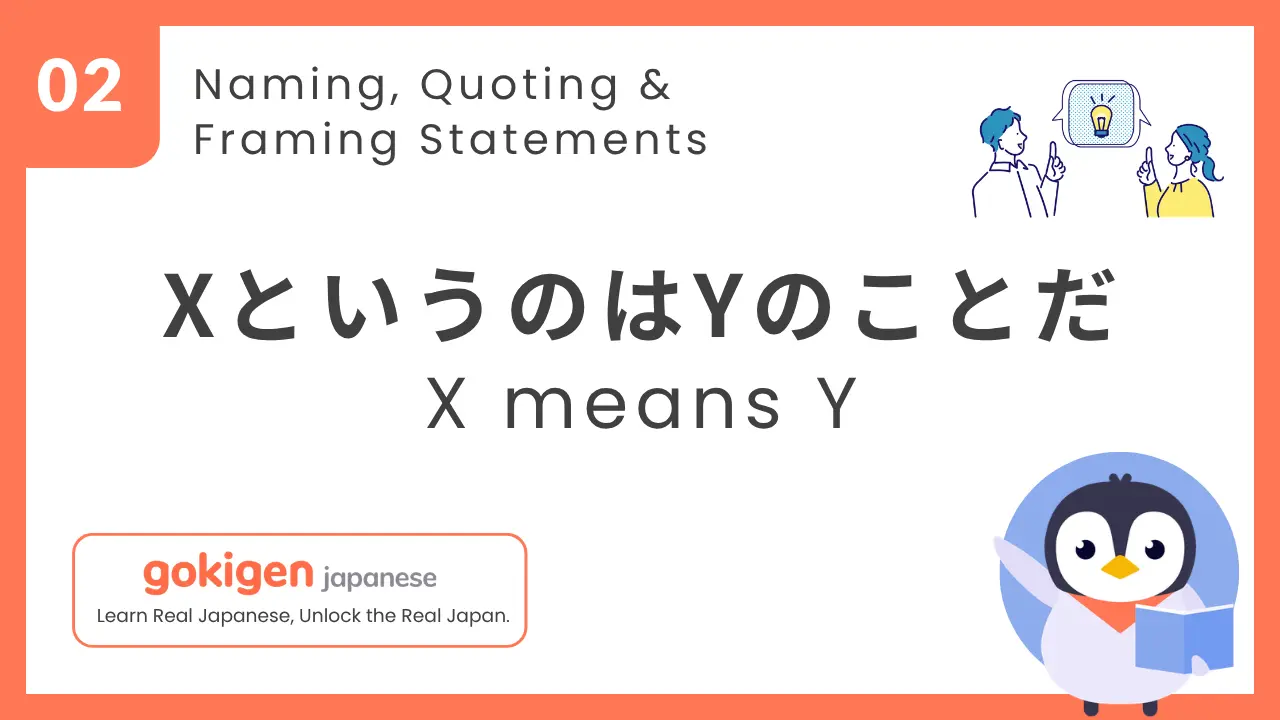
XというのはYのことだ
XというのはYのことだ / Yということだ (X is Y, X means Y) looks similar, but the meaning is completely different.
禁煙というのは、たばこを吸ってはいけないということです。
Kinen means that you must not smoke.
Here, ということです is part of a definition, not hearsay or confirmation.
So do not confuse:
- …ということだ = hearsay / confirmation
- XというのはYということだ = defining the meaning of a word
(…という)わけだ
…というわけだ has two meanings:
- that’s why / no wonder
- so you mean
Examples:
- 今日、花火大会があるそうです。- それで、こんなに人が多いわけですね。
I hear there’s a fireworks show today. – So that’s why there are so many people here. - 来年から始業時間が十五分はやくなるそうです。- 今は九時開始ですから、八時四十五分になるわけですね。
I hear that starting next year, the start of the workday will be moved up by fifteen minutes. – Since it currently starts at 9:00, that means it will be 8:45.
5. Practice
Translate the following English into Japanese using …ということだ.
| English | Example Answer |
|---|---|
| According to the weather forecast, it will be sunny tomorrow. | 天気予報によると、明日は晴れるということです。 |
| According to the doctor, I should get more rest. | 医者の話では、もっと休んだほうがいいということです。 |
| (In response to a phone call from a client) So you mean the meeting has been moved to Friday, right? | 会議は金曜日に変更になったということですね。 |
FAQ
- QCan I use this grammar in casual conversations with my friends?
- A
Yes, but you should change it to the casual form. Instead of saying 〜ということだ, native speakers say 〜ってことだ or simply end the sentence with 〜ってこと? when asking for confirmation. (e.g., つまり、別れたいってこと? = So you mean you want to break up?)
- QWhat is the exact difference between そうです and ということです for hearsay?
- A
そうです is the most standard, neutral way to say “I heard that…” and is used in everyday life. ということです sounds much more formal, objective, and professional. You will hear it often on the news, in business meetings, or when someone is carefully explaining facts.
Conclusion
In this article, you learned that …ということだ has two main meanings: reporting information you heard, and confirming what someone said.
With this grammar, you can now:
- report information in a more formal and natural way,
- confirm instructions or messages politely in business situations,
- and distinguish …ということだ from similar expressions like ~そうだ.