
Introduction
Have you ever wanted to ask “What does this word mean?” or explain “X means Y” in Japanese?
- How do you explain what a salaryman is?
- How do you define a word like otaku?
- How do you explain that 禁煙 means “you must not smoke”?
When you want to explain the meaning of a word or expression, Japanese often uses XというのはYのことだ or XというのはYということだ.
1. Meaning: What do XというのはYのことだ / Yということだ mean?
These patterns are used when explaining the meaning of a word.
They mean:
- X is Y
- X means Y
Core idea
- X = the word or expression you want to explain
- Y = its meaning or definition
2. Formation
Pattern 1: noun definition (~のことだ)
Xというのは + Y の + ことだ
Use this when Y is a noun or noun phrase.
Example 1 (noun): Keigo (敬語, honorific language) refers to polite speech.
- ✅ 敬語というのは丁寧な言葉のことだ。
- ✖ 敬語というのは丁寧な言葉ということだ。
Example 2 (noun phrase): A salaryman is a person who works for a company and receives a salary.
- ✅ サラリーマンというのは、会社で働いて給料をもらう人のことだ。
- ✖ サラリーマンというのは、会社で働いて給料をもらう人ということだ。
Pattern 2: sentence definition (~ということだ)
Xというのは + Plain-form sentence + という + ことだ
Use this when Y is a sentence or full statement.
Example: Ryugaku (留学, studying abroad) means studying in another country.
- ✅ 留学というのは、外国で勉強するということです。
- ✖ 留学というのは、外国で勉強するのことです。
Grammar breakdown
- と (particle)
Quotation particle. It marks the word or content being referred to. - いう (verb)
Literally means “to say.” In this grammar, it helps introduce the word being defined. - の (particle) + は (particle)
Turns the quoted expression into the topic of the sentence. - こと
Means “thing / matter.” It is used to turn a phrase or sentence into something that can be explained as a concept.
Casual Speech: っていうのは
In casual conversation, というのは (to iu no wa) is often changed to っていうのは (tte iu no wa).
E.g., 無料 (free) means that it costs zero yen.
- [formal] 無料というのはゼロ円だということです。
- [casual] 無料っていうのはゼロ円っていうことだ(よ)。
Extra patterns: when X or Y is an adjective
So far, the examples have used nouns and noun phrases. But X and Y can also be adjectives.
When X is an adjective:
Use the same pattern — simply place the adjective before というのは.
- 画期的というのは、これまでにない新しいアイデアや方法のことです。= “Kakki-teki” means an idea or method that is completely new and unlike anything before.
- 「器が小さい」というのは、ちょっとしたことで怒ったり、人を許せなかったりする人のことです。= “Utsuwa ga chiisai” refers to someone who gets angry over small things or cannot forgive others.
When Y is an adjective sentence:
When the definition itself is an adjective or adjective-based sentence, use ~ということだ (not ~のことだ).
- 「器が小さい」というのは、人間としての度量が狭いということだ。= “Utsuwa ga chiisai” means that a person has little tolerance or generosity as a human being.
3. Useful Examples

サラリーマンというのは、会社で働いて給料をもらう人のことです。
A salaryman is a person who works for a company and receives a salary.

オタクというのは、アニメやマンガ、アイドルなどに熱中している人のことです。
An “otaku” is someone who is passionate about anime, manga, pop idols, and the like.

禁煙というのは、たばこを吸ってはいけないということです。
“Kinen” means that you must not smoke.

節約というのは、むだなお金を使わないようにするということです。
Setsuyaku means trying not to spend money unnecessarily.
4. Related grammar (comparison)
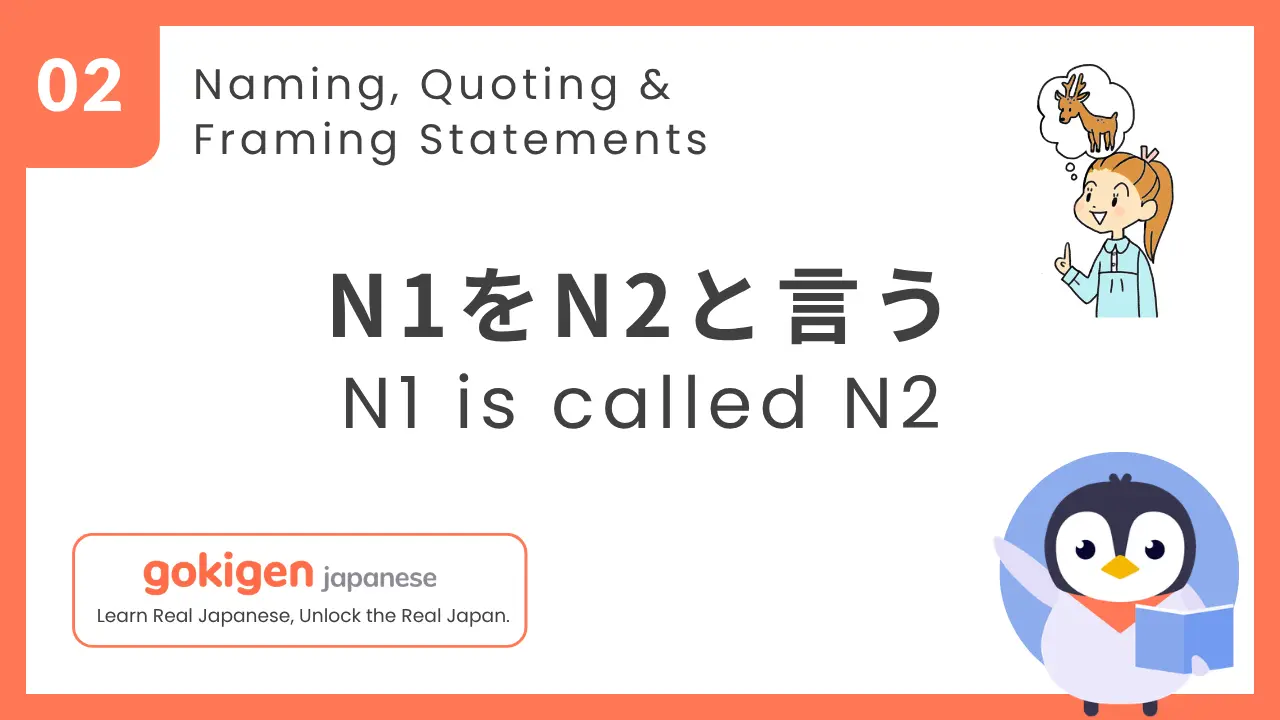
N1をN2と言う
N1をN2と言う is used to name something. This is very close in meaning to XというのはYのことだ, but the sentence structure is different.
E.g., Definition of the term “salaryman”
- 会社で働いて給料をもらう人をサラリーマンと言います。= A person who works for a company and receives a salary is called a salaryman.
- You can also say: サラリーマンというのは会社で働いて給料をもらう人のことです
…というN
…というN means “the N that [sentence]” or “the N saying that …”
For example:
- 子どもが減っているというニュース
the news that the number of children is decreasing
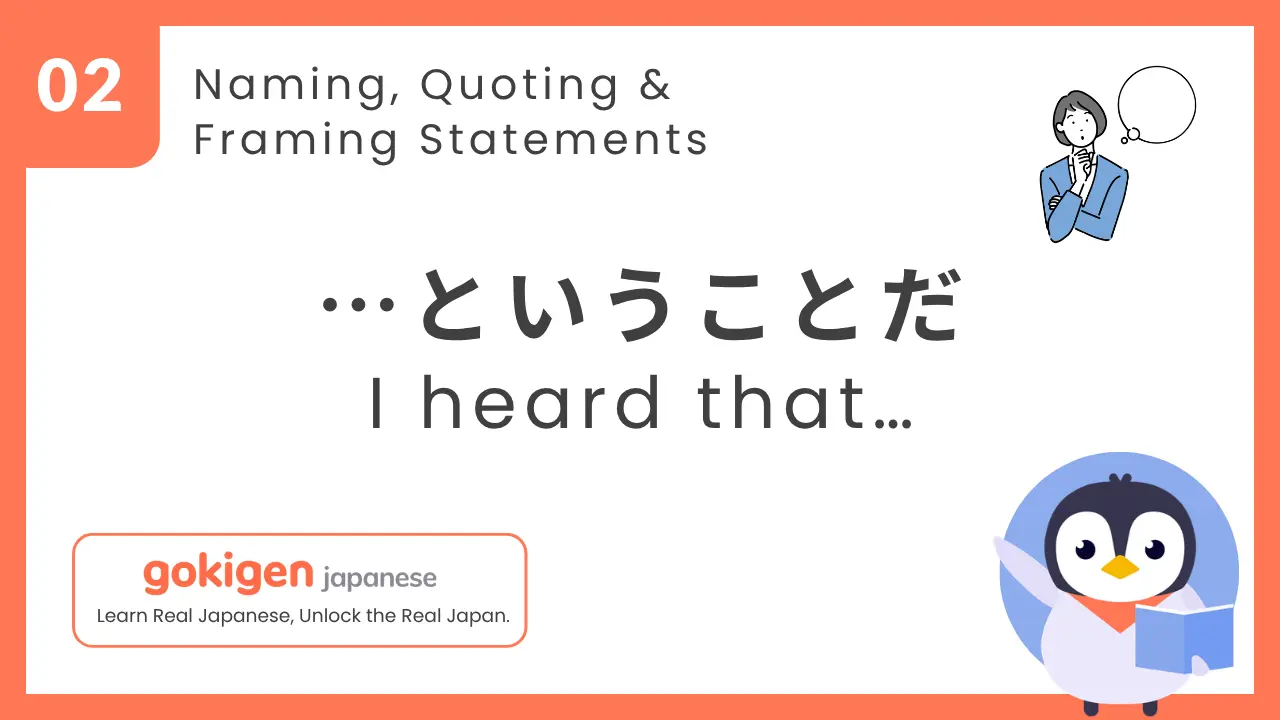
…ということだ
…ということだ can also mean “I heard that …” or “according to …” depending on context.
- 天気予報によると、明日は雨だということです。
According to the weather forecast, it will rain tomorrow.
But in this article’s pattern, ~ということだ is part of definition, not reported speech. So the meaning changes depending on the structure.
Xとは何ですか / Xって何ですか
These are very common ways to ask for a definition.
- 「サラリーマン」とは何ですか。
What is a salaryman? - オタクって何ですか。[casual]
What is an otaku?
After a question like this, the answer is often given with:
- XというのはYのことです
- XというのはYということです
5. Practice
Translate the following English into Japanese using XというのはYのことだ or Yということだ.
| English | Example Answer |
|---|---|
| 禁煙 means that you must not smoke. | 禁煙というのは、たばこをすってはいけないということです。 |
| 寮 is a place where students live. | 寮というのは、学生が住む場所のことです。 |
| 立入禁止 means that you must not go inside. | 立入禁止というのは、中に入ってはいけないということです。 |
| 駐車禁止 means that you must not park your car. | 駐車禁止というのは、車を停めてはいけないということです。 |
FAQ
- QDo I always have to say “Xというのは” at the beginning?
- A
If the topic is already clear from the conversation, you can drop the “Xというのは” part and just give the definition.
- A: 禁煙とは何ですか。
What does “禁煙” mean? - B:
(禁煙というのは)たばこをすってはいけないということです。
It means that you must not smoke.
- A: 禁煙とは何ですか。
- QAre there other ways to ask “What does X mean?”
- A
Yes! While Xとは何ですか is very common, you can also ask directly about the meaning by using the word 意味 (いみ = meaning).
- A: 駐車禁止とはどういう意味ですか。
What does “駐車禁止” mean? - B: ここに車を停めてはいけないという意味です。
It means that you must not part your car here.
- A: 駐車禁止とはどういう意味ですか。
Conclusion
In this article, you learned how to use XというのはYのことだ and XというのはYということだ to explain the meaning of words and expressions in Japanese.
With these grammar patterns, you can now:
- define words more naturally in Japanese,
- choose between noun-based and sentence-based explanations,
- and better understand other grammar with という, such as N1をN2と言う and …というN.