
Video
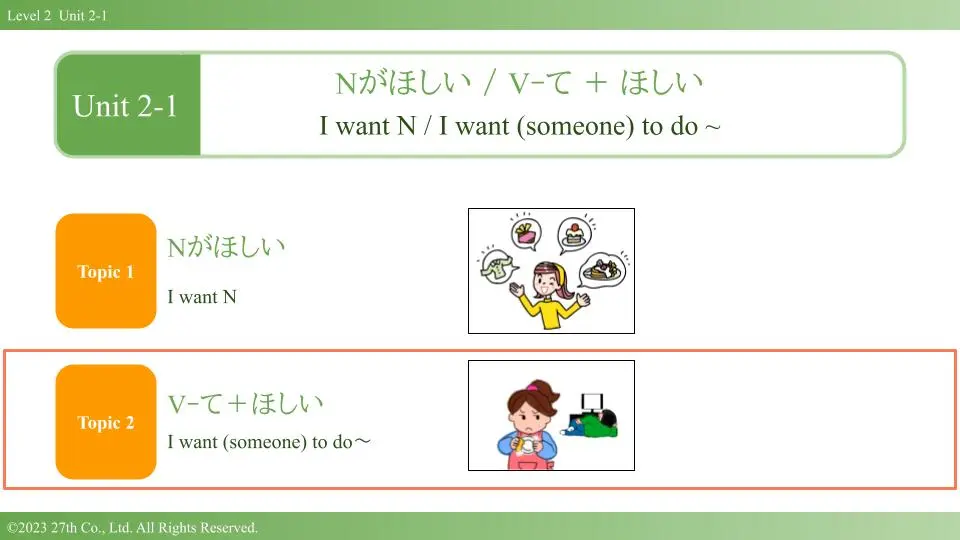
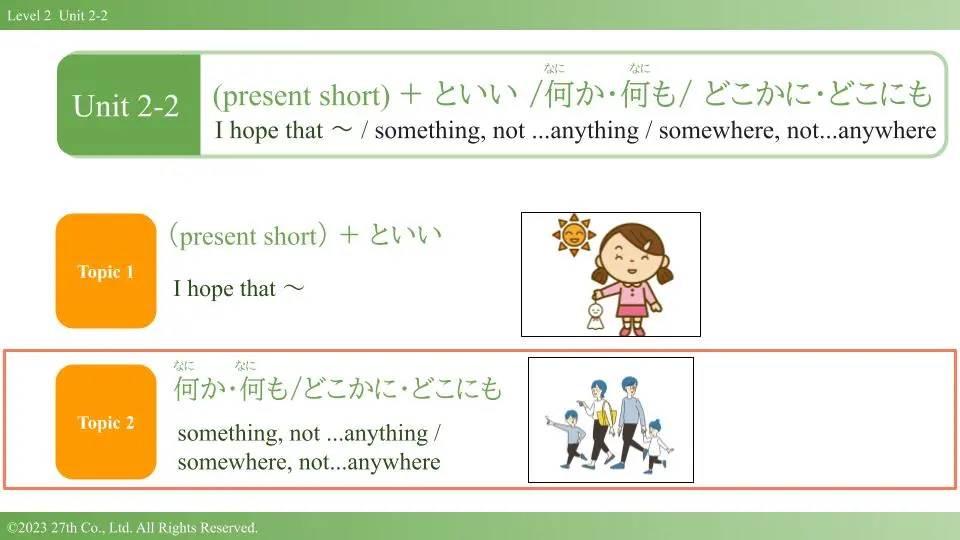
Let’s watch this short video for a quick overview.
Source: gokigen japanese official YouTube Channel
Introduction
Do you ever want to say things like:
- “I hope I’ll pass the test.”
- “I hope it’s sunny tomorrow.”
- “I hope you get a good job.”
In Japanese, we use this form to express hope or wishes for the future:
👉 (Plain present) + といい(ですね/んですが)
= “I hope that…”
This simple but powerful pattern helps you express your desires for yourself or someone else — politely and naturally.
1. Grammar Structure
Pattern: Plain present (short form) + といい(ですね/んですが)
| Use Case | Structure | Example | Meaning |
|---|---|---|---|
| Hope for someone else | V/Adj/N + といいですね | 試験に合格するといいですね。 | I hope you pass the test. |
| Express your wish for your own luck | V/Adj/N + といいんですが | 日本にいきます。飛行機が安いといいんですが。 | I am going to Japan. I hope that the flight is going to be cheap. |
✨ Key Point:
- Use といいですね for others.
- Use といいんですが for yourself (sounds more modest).
2. How It Works
Let’s look at a few examples to understand how this form is used in real situations.
When hoping for someone else
〜といいですね (casual: ~といいね) often used when hoping for others, adding a friendly or sympathetic tone. Can also be used when hoping for something and seeking the listener’s agreement or sharing the hope.

来月、転職します。
I’m changing jobs next month.

さみしいです。いい仕事が見つかるといいですね。
I’ll miss you. I hope you find a good job.

明日、ソフトボールの試合があるんだ。
I have a softball game tomorrow.

試合に勝てるといいね。がんばって!
I hope your game goes well. Good luck!
When hoping for yourself
〜といいんですが (casual: ~といいんだけど) is used for oneself, adding a softer, more modest, or slightly hesitant/worried tone. It implies “I hope, but…” suggesting there might be uncertainty or a slight concern. It comes from んです + が.
週末は何をしますか。
What are you going to do this weekend?
友だちと公園でテニスをするつもりです。
I’m planning to play tennis in the park with a friend.
晴れるといいんですが。
I hope it’ll be sunny.
夏休みの予定はある?
Do you have any plans for the summer vacation?
YOASOBIのコンサートにいきたいの。
I want to go to a YOASOBI concert.
チケットが当たるといいんだけど。
I hope I can get a ticket.
3. Important Notes
な-adjectives and nouns
When using な-adjectives and nouns with といい, you need to add だ.
Example: I hope it’s going to be sunny. (You are going on a trip next week)
❌ 晴れといいんですが。
✅ 晴れだといいんですが。
verbs in potential forms + といいんですが / といいですね
~といいんですが / ~といいですね is used to express a hope or wish about something that is not fully under your control (something that depends on circumstances, luck, other people, rules, timing, etc.).
Because of that, this pattern often appears with a potential form, which naturally highlights “whether it will be possible” rather than “whether I will choose to do it.”
Example: I hope that I can go to Japan next year. (You are busy at work and have a hard time taking time off)
- ❌ 日本に行くといいんですが。
- ✅ 日本に行けるといいんですが。
In this example, “whether I go to Japan or not” is something I can control, but “whether I can go to Japan due to my busy work schedule” is not. So “行くといいんですが” sounds odd as a “circumstances-dependent wish.”
Additional natural examples:
- しょうらい、プロのサッカーせんしゅになれるといいですね。
I hope you can become a professional soccer player someday. - 30歳までにけっこんできるといいんですが。
I hope I can get married by the time I turn 30.
4. Example Sentences
| Japanese | English |
|---|---|
| 早く良くなるといいですね。 | I hope you feel better soon. |
| 次のJLPTが簡単だといいんですが。 | I hope my next JLPT is going to be easy. |
| 明日、雨じゃないといいですね。 | I hope it doesn’t rain tomorrow. |
| 八時のバスに乗れるといいんですが。 | I hope that I can catch the bus at 8 o’clock. |
5. Practice Time!
~といいですね
Situation: Your friend is sick.
| Cue | Example Answer |
|---|---|
| I hope you will feel better soon. | はやく良くなるといいですね。 |
| I hope you will be able to come to school tomorrow. | あした学校に来られるといいですね。 |
~といいんですが
Situation: You’re talking with a friend after work. You want to travel, but you’re very busy and you’re not sure if you can get time off.
| Cue | Example Answer |
|---|---|
| I hope I can take a day off next week. | 来週、休みが取れるといいんですが。 |
| I hope I can book the flight tickets. | チケット / 航空券が取れるといいんですが。 |
| I hope I won’t get sick before the trip. | 旅行の前に、病気にならないといいんですが。 |
6. FAQ – Frequently Asked Questions
- QCan I use this pattern with past tense?
- A
No. The phrase that comes directly before 「〜といい」 must be in the plain present (short) form, even when you are expressing a hope about a future event. You cannot use past tense forms like 〜た or 〜なかった directly before といい.
- QWhat’s the difference between といい and ほしい?
- A
- 〜といい: Expresses a hope or wish for a situation or outcome to be favorable or to occur. It can be about events, states, or abilities (yours or others’).
- 日本に行けるといいんですが。— I hope I can go to Japan.
- 〜がほしい: Expresses your desire to possess or have a noun (a thing).
- 日本に行くためのお金がほしい。— I want the money to go to Japan.
- 〜てほしい: Expresses your desire for someone else to perform an action for you.
- 日本語を教えてほしい。— Please teach me Japanese.
- 〜といい: Expresses a hope or wish for a situation or outcome to be favorable or to occur. It can be about events, states, or abilities (yours or others’).
- QWhat is the difference between 「〜といい」 and 「〜たらいい」(V-たform + ra + ii)?
- A
Both can express a sense of “it would be good if ~” or sometimes even recommendations (“you should ~”). However:
- 〜といい: More directly expresses a hope or wish for a certain outcome or situation.
- 明日、晴れるといいんですが。= I hope it’ll be sunny tomorrow.
- 〜たらいい: Acts as a conditional expression meaning “if X happens, it would be good” or “doing X would be good.” It is sometimes used for making recommendations (“You should/had better do X”) or suggesting a hypothetical positive outcome.
- 明日、晴れたらいいんですが。= It would be nice if it were sunny tomorrow.
- 〜といい: More directly expresses a hope or wish for a certain outcome or situation.
- QHow do I say “I hope that [something] doesn’t happen” using this pattern?
- A
To express a hope that something doesn’t happen, use the plain present negative (short form) before 「〜といい」.
- 雨が降らないといいですね。= I hope it doesn’t rain.
- 次のテストが難しくないといいんですが。= I hope the next test won’t be difficult.
- 台風が来ないといいんですが。= I hope a typhoon doesn’t come.
7. Conclusion
The structure (plain present) + といい is a handy way to express your wishes or hopes in everyday Japanese. Just remember:
- といいですね → wish for someone else
- といいんですが → hope for yourself
Start using this pattern when you want to cheer someone on or quietly hope for something better — it’s one of the most heartfelt expressions in Japanese!