
Video
Let’s watch this short video for a quick overview.
Source: gokigen japanese official YouTube Channel
1. Introduction
Want to say things like:
- “I want to eat something.”
- “I didn’t buy anything.”
- “I went somewhere last weekend.”
- “I didn’t go anywhere.”
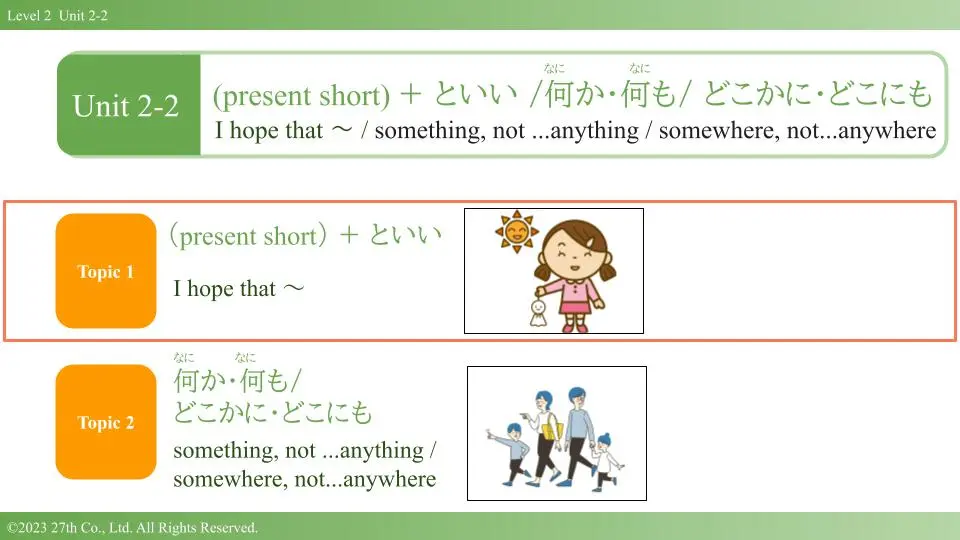
In this lesson, we’ll learn how to express these ideas using:
- 何か(なにか) = something
- 何も(なにも) = not… anything
- どこかに = somewhere
- どこにも = not… anywhere
2. Meaning
何か(なにか)・何も(なにも)
In Japanese, 何か means “something,” while 何も means “not…anything” when used with a negative verb.
| type | Japanese | Meaning |
|---|---|---|
| positive statements | 何か(なにか) | something |
| questions | 何か(なにか) | anything? |
| negative statements | 何も (なにも)+ negative | not … anything |
Example:
- 何か(なにか)たべたいです。= I want to eat something.
- スーパーで何か(なにか)買いましたか。 = Did you buy anything at the supermarket?
- いいえ、何も(なにも)買いませんでした。= No, I did not buy anything.
どこかに・どこにも
“どこかに” means “somewhere” and “どこにも” means “not anywhere” or “nowhere” used with a negative verb. These expressions are used to talk about indefinite locations in Japanese.
| type | Japanese | Meaning |
|---|---|---|
| positive statements | どこかに | somewhere |
| questions | どこかに | anywhere? |
| negative statements | どこにも | not … anywhere |
Example:
- 週末、どこかに行きたいです。= I want to go somewhere this weekend.
- 週末、どこかに行きますか。= Are you going anywhere this weekend?
- いいえ、どこにも行きません。= No, I am not going anywhere.
3. Sentence Structure
何か(なにか)・何も(なにも)
To use 何か and 何も in sentences, place 何か before a verb in a positive sentence to mean “something.”
Example: デパートで何か買いましたか。= Did you buy anything at a department store?
Also place 何も before a verb in a negative sentence to mean “not…anything.”
Example: デパートで何も買いませんでした。= I did not buy anything at a department store.
どこかに・どこにも
To express indefinite locations in Japanese, place “どこかに” before a verb in a positive sentence to mean “somewhere” or “anywhere”.
Example: 週末、どこかに行きたいです。= I want to go somewhere this weekend.
Also place “どこにも” before a verb in a negative sentence to mean “not anywhere” or “nowhere”.
Example: 週末、どこにも行きませんでした。= I did not go anywhere last weekend.
4. When particles are omitted — and when they are not
With words like 何か, 何も, どこか, and だれか, some particles are often omitted, but others are usually kept because they show important information such as direction, place, source, or relationship.
Particles often omitted
- を (object marker)
- ✅ 何か食べましょうか。= Shall we eat something?
- ▲ 何かを食べましょうか。- This sentence is not entirely wrong, but it is somewhat unfamiliar to native Japanese.
- が (subject marker)
- そこに何か(が)います。= There’s something there.
Particles usually not omitted
- で (place/action context)
- 私たち、どこかで会いましたか。= Have we met somewhere before?
- You never say “私たち、どこか会いましたか”
- に (destination / target)
- 週末、どこかに行きたいです。 = I want to go somewhere this weekend.
- 週末、どこにも行きません。 = I’m not going anywhere this weekend.
- へ (direction)
- もうすぐGWなので、どこかへ行きたいです。 = It’s almost Golden Week, so I want to go somewhere.
- から (source / origin)
- たくさんの会社に応募しましたが、どこからも返事がありませんでした。 = I applied to many companies, but I didn’t get a reply from any of them.
Similar rules also apply to other question words such as だれ. For example, in expressions like 「だれとも」, the particle と is not omitted because it shows the relationship “with.”
- だれとも (dare to mo) + Negative Verb: not… with anyone
- きのう、だれとも話しませんでした。 = I didn’t talk with anyone yesterday.
5. Practice Time
Try answering the following using today’s grammar!
- 今月、何か買いましたか。 = Did you buy anything this month?
- きのう、どこかに行きましたか。 = Did you go anywhere yesterday?
Example Answers:
- はい、Tシャツを買いました。= Yes, I bought a T-shirt.
いいえ、何も買いませんでした。= No, I did not buy anything. - はい、図書館に行きました。= Yes, I went to the library.
いいえ、どこにも行きませんでした。= No, it did not go anywhere.
FAQ
- QWhat is the difference between 「何か」(nanika) and 「何でも」(nandemo)?
- A
何か (nanika): Means “something” (an unspecified thing). Used in positive sentences and questions.
Example: 何か食べたいです。(Nanika tabetai desu.) = I want to eat something.何でも (nandemo): Means “anything” (any item from a group is okay) or “everything” depending on context. Used with positive verbs.
Example: 何でも食べられます。(Nandemo taberaremasu.) = I can eat anything.
- QCan the particle 「を」(o) be omitted after 「何か」(nanika) or 「何も」(nanimo)?
- A
Yes. In spoken Japanese, the particle 「を」 is very frequently omitted after 「何か」 or 「何も」 when they function as direct objects.
Example: 何か(を)飲みたいです。= I want to drink something.
- QBesides 「どこかに」(dokoka ni), can other particles (like 「で」「へ」「から」「と」) be used with 「どこか」(dokoka)?
- A
Yes, absolutely. どこか + Particle:
- わたしたち、どこかで会いましたか。 = Have we met somewhere?
- もうすぐGWなので、どこかへ行きたいです。 = It is almost Golden Week (= a vacation week in May) and I want to go somewhere.
- QAre there similar patterns for “someone” / “anyone” / “no one” and “sometime” / “anytime” / “never”?
- A
Yes, these follow the same pattern using 「だれ」(dare – who) :
- だれか (dareka): someone / anyone (in questions)
だれか来ましたか。= Did someone come? - だれも (daremo) + Negative Verb: no one / not… anyone
だれも来ませんでした。= No one came. - だれにも (dare ni mo) + Negative Verb: not… to anyone
だれにも言いませんでした。= I didn’t tell anyone (about it). - だれとも (dare to mo) + Negative Verb: not… with anyone
きのう、だれとも話しませんでした。= I didn’t talk with anyone yesterday.
- だれか (dareka): someone / anyone (in questions)
- QWhat’s the difference between questions with 何 and questions with 何か? How do you answer them?
- A
Questions with 何 are wh-word questions (“what?”). The speaker is asking you to name the specific thing, so you answer by replacing 何 with the actual item.
A: 今朝、何を食べましたか。= What did you eat this morning?
B: おにぎりを食べました。= I ate rice balls.Questions with 何か are yes/no questions (“did you eat something?”). The speaker is asking whether something happened / whether there was anything, not what it was (at least not in the first step). So you typically answer with はい / いいえ, and then you can add details if needed.
A: 今朝、何か食べましたか。= Did you eat anything this morning?
B1: はい、おにぎりを食べました。= Yes, I ate an onigiri.
B2: いいえ、何も食べませんでした。= No, I didn’t eat anything.
Conclusion
Mastering nanika, nanimo, dokoka ni, and doko ni mo helps you sound more natural and handle a wider range of daily conversations in Japanese.
Now you can say things like:
- “I want to eat something.”
- “I didn’t buy anything.”
- “I went somewhere last weekend.”
- “I didn’t go anywhere.”