
Video
Let’s watch this short video for a quick overview.
Source: gokigen japanese official YouTube Channel
Introduction
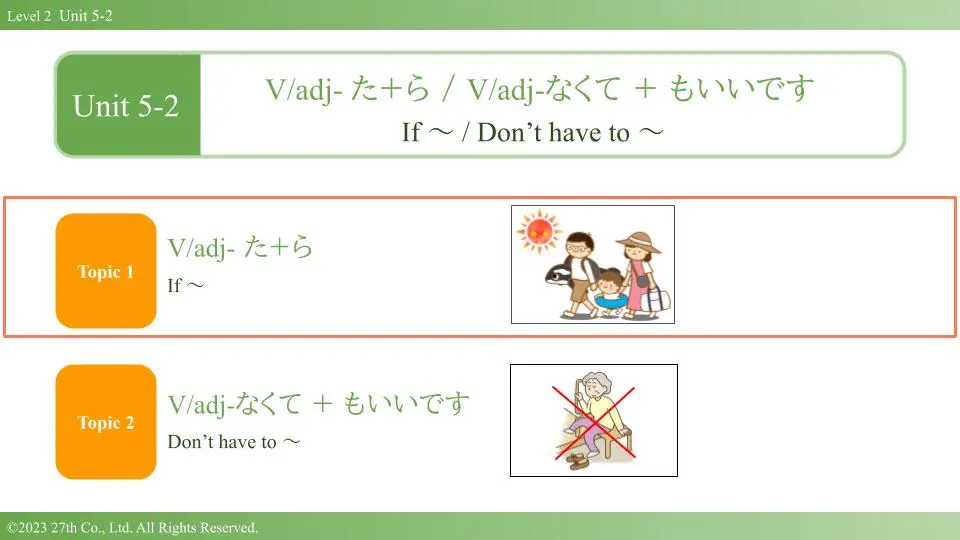
Want to say “You don’t have to ~” in Japanese?
This is useful when talking about rules, flexibility, or being polite and considerate. The phrase you need is:
👉 V / adj-なくて + もいいです
Let’s learn how to use this expression naturally!
1. Grammar Structure
Pattern: Verb / adjective / noun (negative て-form) + もいいです
= “You don’t have to ~” / “It doesn’t have to be ~”
| Type | negative te-form | Example |
|---|---|---|
| Verb | 行く→行かない→行かなくて | 行かなくてもいいです。 You don’t have to go. |
| い-adjective | 高い→高くない→高くなくて | プレゼントは高くなくてもいいです。 The present does not need to be anything expensive. |
| な-adjective | 好き→好きじゃない→好きじゃなくて | 好きじゃなくてもいいです。 It’s okay if you don’t like it. |
| Noun | 毎日→毎日じゃない→毎日じゃなくて | この花の水やりは、毎日じゃなくてもいいです。 You don’t have to water this flower every day. |

This pattern is perfect for conveying a sense of flexibility, permission, or kindness, letting the listener know that an action isn’t mandatory or expected.
2. How to Form It
Verbs
- Conjugate to the negative form (〜ない)
- Replace the final い with くて. This is the Negative て form of verbs/adjectives.
- Add もいいです
| Verb | Negative | なくて-form | Example |
|---|---|---|---|
| 行く (to go) | 行かない | 行かなくて | 行かなくてもいいです |
| 食べる (to eat) | 食べない | 食べなくて | 食べなくてもいいです |
| する (to do) | しない | しなくて | しなくてもいいです |
| 来る (to come) | 来ない | 来なくて | 来なくてもいいです |
Adjectives and Nouns
い-adjective
高い → 高くない → 高くなくて → 高くなくてもいいです
(= It doesn’t have to be expensive)
な-adjective / noun
元気な → 元気じゃない → 元気じゃなくて → 元気じゃなくてもいいです
(= It’s okay not to be energetic / well)
If you’d like to review the te-form or the short (plain) negative form, please refer to the article below:
- How to Make the te-form of Verbs
- How to Make the te-form of Adjectives
- Past Tense Plain Form (Short Form) – Verbs
- Past Tense Plain Form (Short Form) – Adjectives and Nouns
3. Example Sentences

お金をおろさなくてもいいです。
You don’t need to withdraw money.

無理しなくてもいいです。
You don’t have to push yourself.

コーヒーに砂糖をいれなくてもいいです。
You don’t need to put sugar in my coffee.

この部屋では靴を脱がなくてもいいです。
You don’t have to take off your shoes in this room.

私がやっておくので、あなたは掃除しなくてもいいです。
I’ll take care of it, so you don’t have to clean.

明日は仕事がないから、早起きしなくてもいいです。
Since I don’t have work tomorrow, I don’t have to wake up early.
4. Practice Time!
Try making your own “you don’t have to ~” sentences using this pattern:
| Situation | Sentence |
|---|---|
| No school tomorrow | 学校に行かなくてもいいです。 |
| No need to take out the trash | ごみを出さなくてもいいです。 |
| Not required to clean your room | 部屋を掃除しなくてもいいです。 |
| Don’t need to do homework | 宿題をやらなくても(しなくても)いいです。 |
| It doesn’t have to be strong | 強くなくてもいいです。 |
| It’s okay if you don’t like Japanese | 日本語が好きじゃなくてもいいです。 |
🎯 Challenge: Write 2 things you don’t have to do this weekend!
5. Common Mistakes
- ❌ Using “ないです” instead of “なくてもいいです”
→ × 行かないです。
✅ 行かなくてもいいです。 - ❌ Forgetting to change ない → なくて
→ × 食べないもいいです。
✅ 食べなくてもいいです。 - ❌ Using this form to mean “must not”
→ ✨ Remember: なくてもいいです = “don’t have to”. This is different from 〜てはいけません (you must not / you are forbidden to do ~)”
6. FAQ – Frequently Asked Questions
- QCan I use ~なくてもいいです to mean “You mustn’t do ~” or “You are forbidden to do ~”?
- A
No, absolutely not! This is a very common mistake.
~なくてもいいですexpresses freedom from obligation (“you don’t have to”).If you want to say “You must not” or “You are forbidden to do ~,” you need to use different grammar patterns like ~てはいけません (te wa ikemasen) or ~てはだめです (te wa dame desu).
- 食べなくてもいいです。 = “You don’t have to eat.”
- 食べてはいけません。 = “You must not eat / You are forbidden to eat.”
- QIs ~なくてもいいです always polite, or can it be used casually?
- A
~なくてもいいです is generally polite and neutral, so it works in many situations (with colleagues, teachers, or strangers).
In casual conversation, you can make it sound more casual in two ways:
- Drop です: ~なくてもいいです → ~なくてもいい
- You can also drop も (very common in speech): ~なくてもいい → ~なくていい
This is just a casual shortening, and the meaning stays the same (“it’s okay not to…”).
You can also add よ for a friendly tone: ~なくていいよ / ~なくてもいいよ
Example: ごめん、遅刻した。– 気にしなくて(も)いいよ。= Sorry, I’m late. – Don’t worry about it.
Conclusion
Now you can:
✅ Use 〜なくてもいいです to say “You don’t have to ~”
✅ Conjugate verbs and adjectives into the correct form
✅ Be polite and flexible in conversations!
🎯 Challenge: Make a list of 5 things you don’t have to do this week using this pattern!