
Introduction
Have you ever wanted to say “Exercising is good for your body,” “I’m bad at speaking in front of people,” or “I’m thinking about quitting my job” in Japanese?
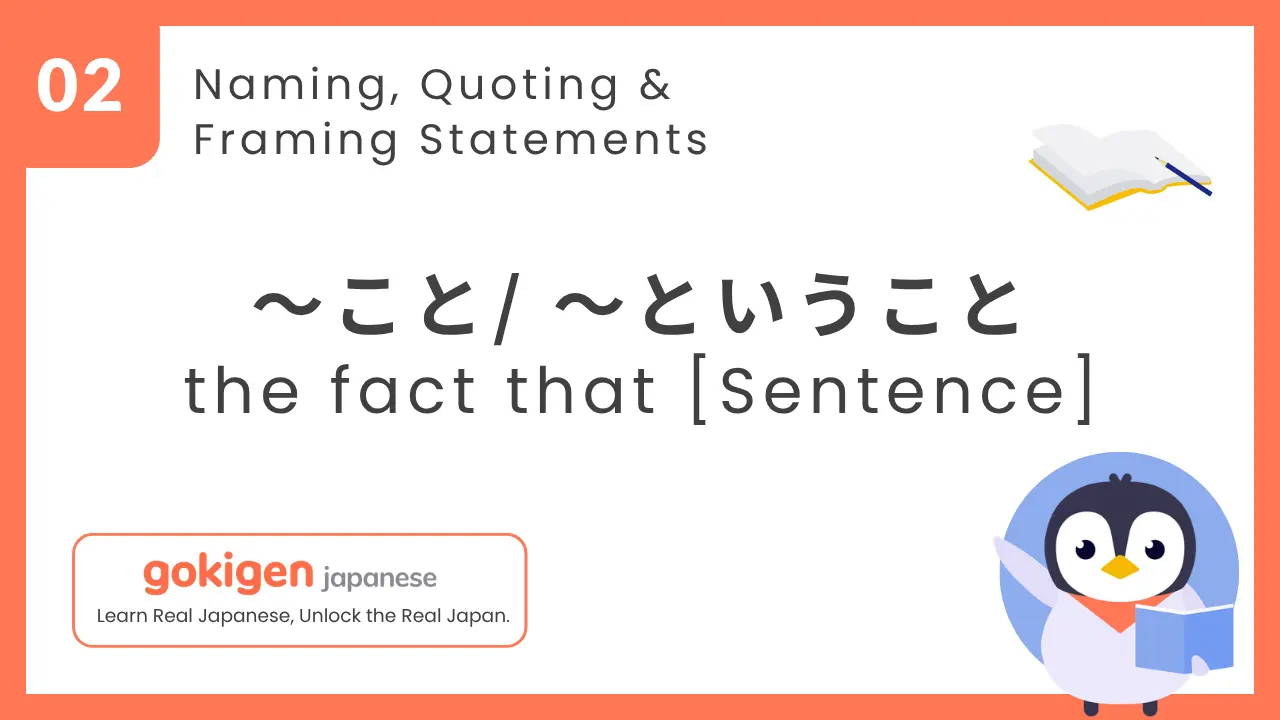
When you want to turn a verb into something like “V-ing” or “to V”, Japanese often uses Verb + こと.
1. Meaning: What do ~ことは / ~ことが / ~ことを mean?
Verb + こと turns a verb into a noun-like expression.
So it can mean things like:
- V-ing
- to V
- the act of V
Then you add particles such as は, が, or を depending on the role in the sentence.
Core idea
- Verb + ことは = “V-ing / to V” as the topic
- Verb + ことが = “V-ing / to V” as the subject
- Verb + ことを = “V-ing / to V” as the object
Compare:
- 運動することは体にいい。
Exercising is good for your body. - 人前で話すことが苦手だ。
Speaking in front of people is difficult for me. - 会社をやめることを考えている。
I am thinking about quitting my job.
In all of these, the verb phrase becomes a noun-like unit.
2. Formation
Verb (dictionary form) + こと + は / が / を
Example
| Pattern | Verb | ~ことは / が / を |
|---|---|---|
| U-verb | 行く (to go) | 行くことは 行くことが 行くことを |
| Ru-verb | 食べる (to eat) | 食べることは 食べることが 食べることを |
| Irregular verb | する (to do) | することは することが することを |
| Irregular verb | 来る (to come) | 来ることは 来ることが 来ることを |
3. Useful Examples
~ことは

運動することは体にいい。
Exercising is good for your body.

日本人と話すことは、日本語の良い勉強方法だ。
Talking with Japanese people is a great way to learn Japanese.
~ことが

人前で話すことが苦手だ。
I am bad at speaking in front of people.

新しい単語を覚えることが楽しい。
Learning new vocabulary is fun.
~ことを

会社をやめることを考えています。
I am thinking about quitting my job.

早く戦争が終わることを願っています。
I hope the war ends soon.
4. Casual form: ~のは / ~のが / ~のを
In many cases, ~こと can be replaced with ~の.
This is especially common in casual conversation.
Compare:
| English | Japanese |
|---|---|
| Exercise is good for your health. | 運動することは体にいい。 運動するのは体にいい。 |
| I’m not good at speaking in front of people. | 人前で話すことが苦手だ。 人前で話すのが苦手だ。 |
| I’m good at making friends. | 友だちを作ることが得意だ。 友だちを作るのが得意だ。 |
A useful guideline
If you are speaking casually with friends, の is often very natural.
If you are writing, explaining carefully, or speaking more formally, こと is often safer.
5. Important fixed expressions: use こと, not の
In some patterns, the form is fixed, so you must use こと.
1) Possibility: ことができる
日本語を話すことができる。(✕ 話すのができる)
I can speak Japanese.
2) Repeated occurrence: ことがある
寝坊することがある。(✕ 寝坊するのがある)
I sometimes oversleep.
3) Experience: past plain form + ことがある
寿司を食べたことがある。(✕ 食べたのがある)
I have eaten sushi before.
4) Decision: ことにする / ことになる
会社をやめることにする。(✕ やめるのにする)
I will decide to quit my job.
These are set grammar patterns, so こと cannot be freely replaced with の.
6. Related grammar (comparison)
~こと。 / You should…
This grammar is used to give instructions, rules, or written directions. It is close to ~しなさい.
It means something like:
- you should…
- make sure to…
For example:
- 明日は9時に集合すること。
Be sure to gather at 9:00 tomorrow. - 携帯電話の電源を切ること。
Turn off your mobile phone.
7. Practice
Translate the following English into Japanese using ことは / ことが / ことを.
| English | Example Answer |
|---|---|
| Studying every day is important. | 毎日勉強することは(が)大切だ。 |
| Learning new kanji is fun. | 新しい漢字を覚えることが楽しい。 |
| I am thinking about changing jobs. | 転職することを考えている。 |
Conclusion
In this article, you learned how to use Verb + ことは / ことが / ことを to express “V-ing” or “to V” in Japanese.
With this grammar, you can now:
- turn verbs into noun-like expressions more naturally,
- use は / が / を depending on the role in the sentence,
- and understand when こと can be replaced by の, and when it must stay こと in fixed expressions like ことができる and ことにする.