

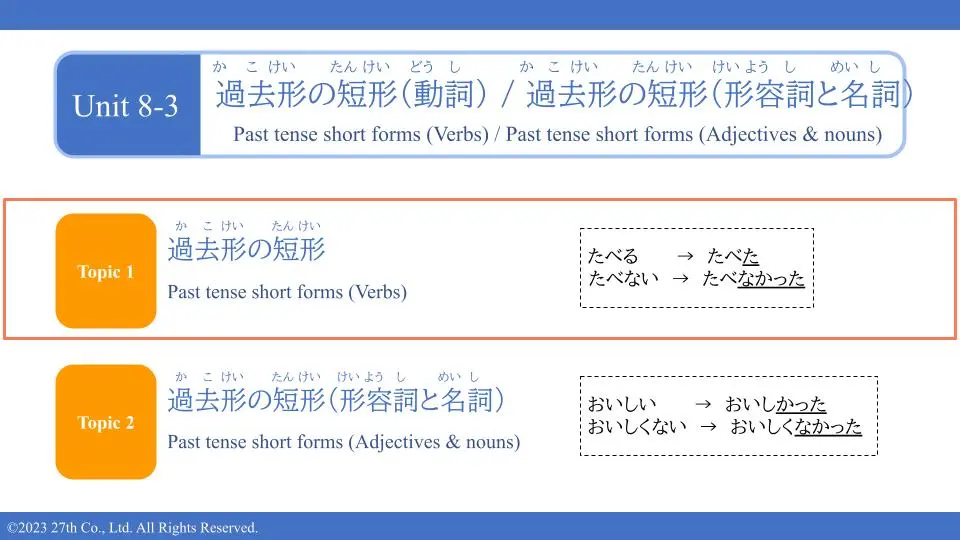
How to Use Japanese Past Tense Plain Form (Short Form) – Verbs in Casual Conversation
Introduction So far, you’ve learned about the past tense of verbs: These are polite forms used in formal conversations. But in casual settings like chatting with... Read more.
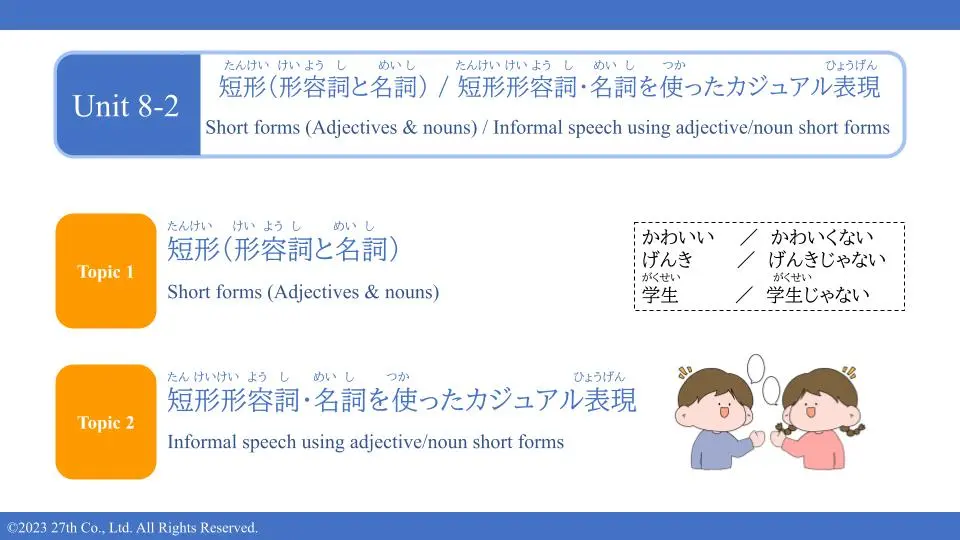
How to Use Japanese Plain Form (Short Form) for Adjectives and Nouns
Introduction If you’ve been learning Japanese, you probably know how to say things politely using です (desu) and じゃないです (janaidesu). But in... Read more.
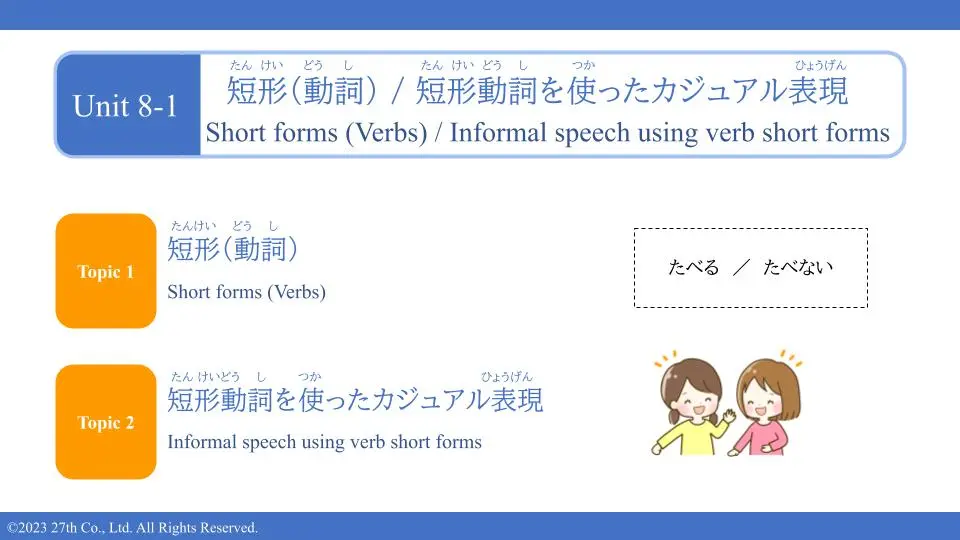
How to Use Japanese Short Forms (Plain Forms) for Casual Conversations
Introduction If you’ve started learning Japanese, you’ve probably already encountered polite verb forms like たべます (tabemasu) or いきます... Read more.
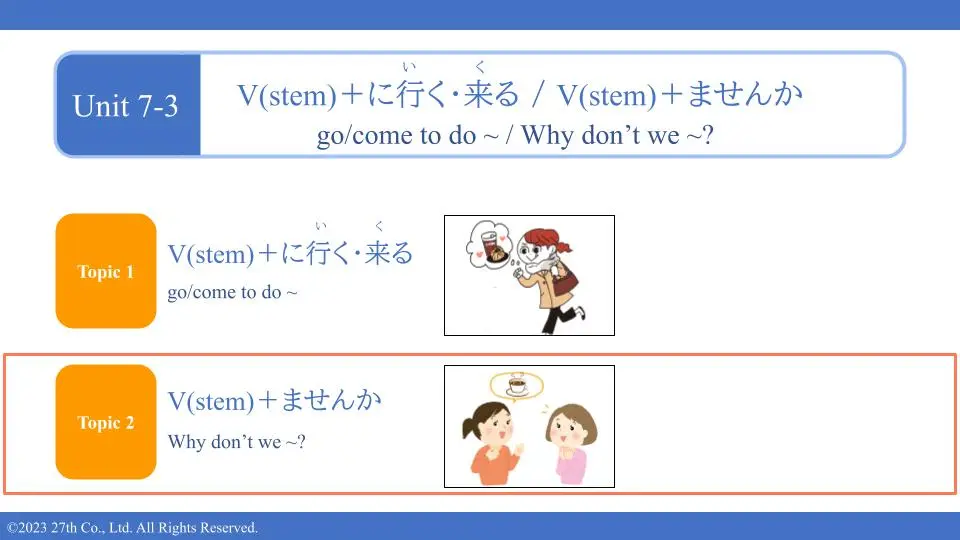
How to Use “V-stem + masen ka” in Japanese | Invite Someone Politely
Introduction Have you ever wanted to say “Shall we go to lunch?” or “Why don’t we play tennis?” in Japanese? There’s a super useful phrase that allows... Read more.
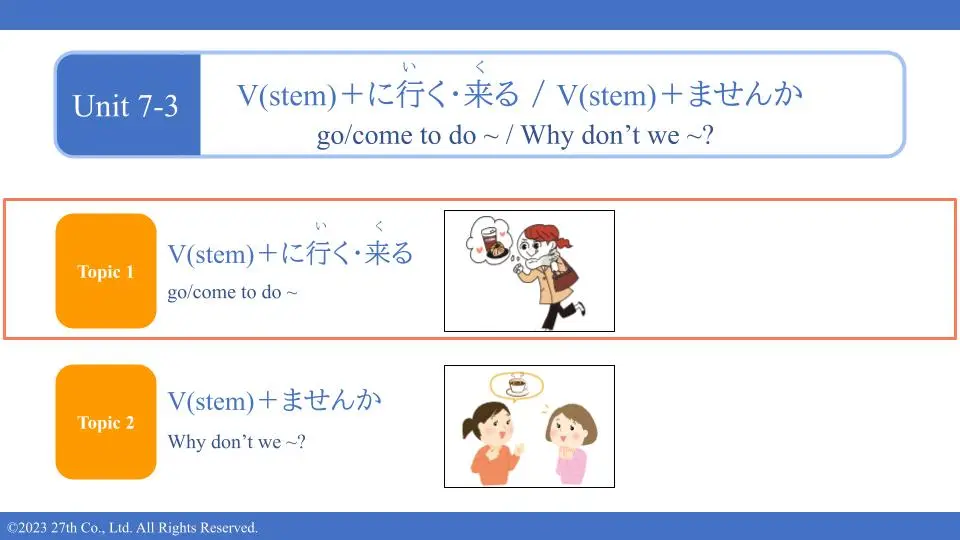
How to Use “V-stem + ni iku / kuru” in Japanese | Go/Come to Do Something
Introduction If you’ve ever wanted to say “I go to the gym to exercise” or “I came to Japan to study,” you’re in the right place. In Japanese, we express... Read more.
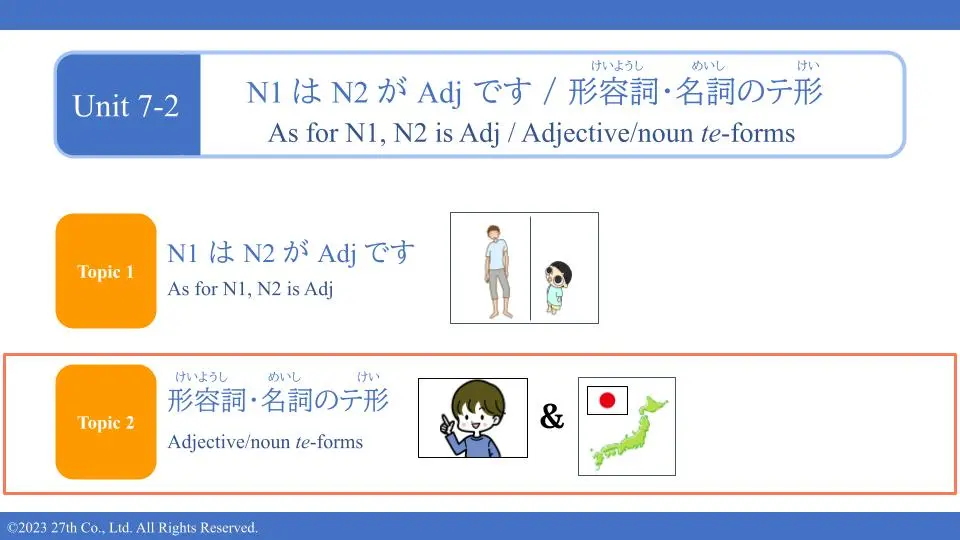
How to Connect Ideas in Japanese Using Adjective and Noun te-Forms
Introduction Want to say “Tokyo is lively and fun” or “Mr. Suzuki is smart and kind”?In English, we use “and” to connect ideas.... Read more.
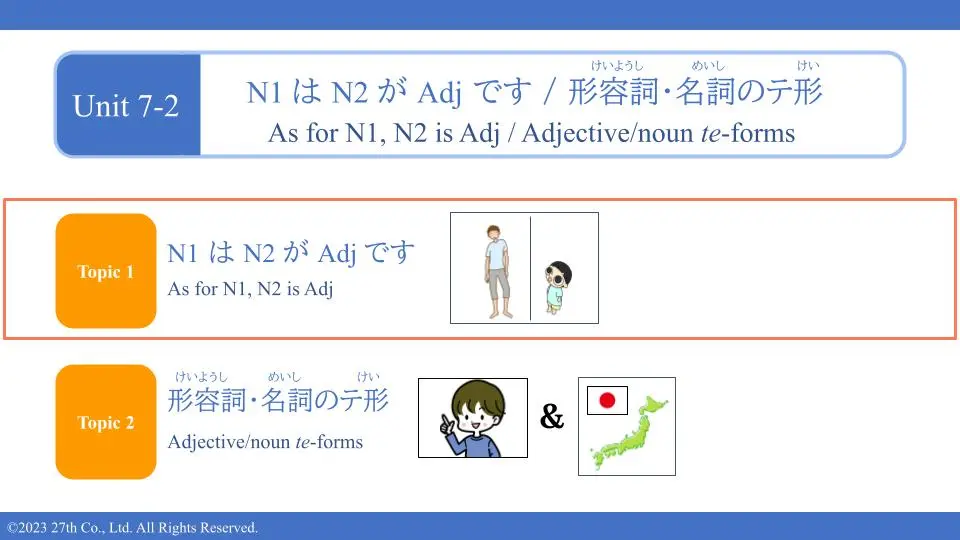
How to Say “As for N1, N2 is Adj” in Japanese | Describe Appearance Naturally
Introduction Want to say “Alice has big eyes” or “My sister has long hair” in Japanese? There’s a simple and powerful sentence structure that lets... Read more.
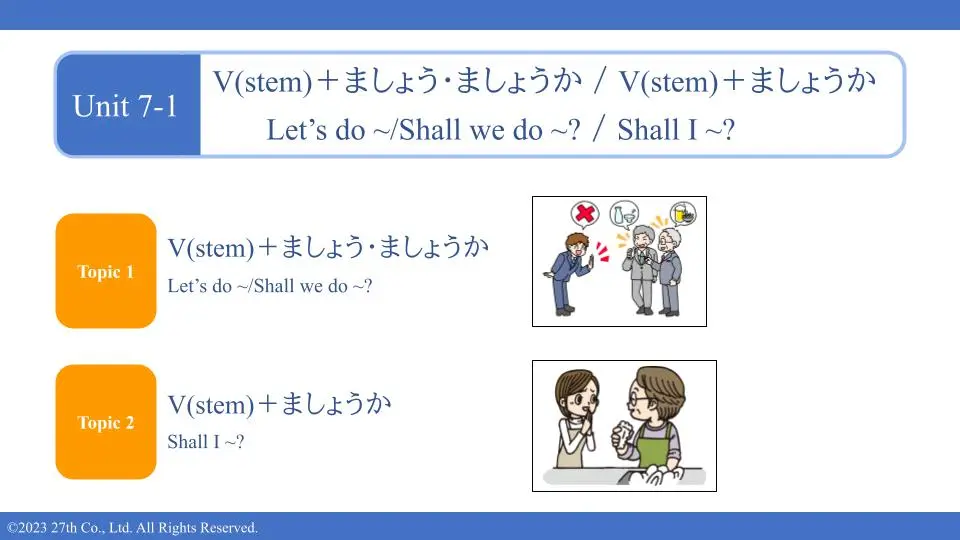
How to Use mashou and mashouka in Japanese | Let’s Do vs Shall I Help?
Introduction When you’re making plans with friends or offering to help someone in Japanese, there’s a simple and polite structure that does the job perfectly:... Read more.
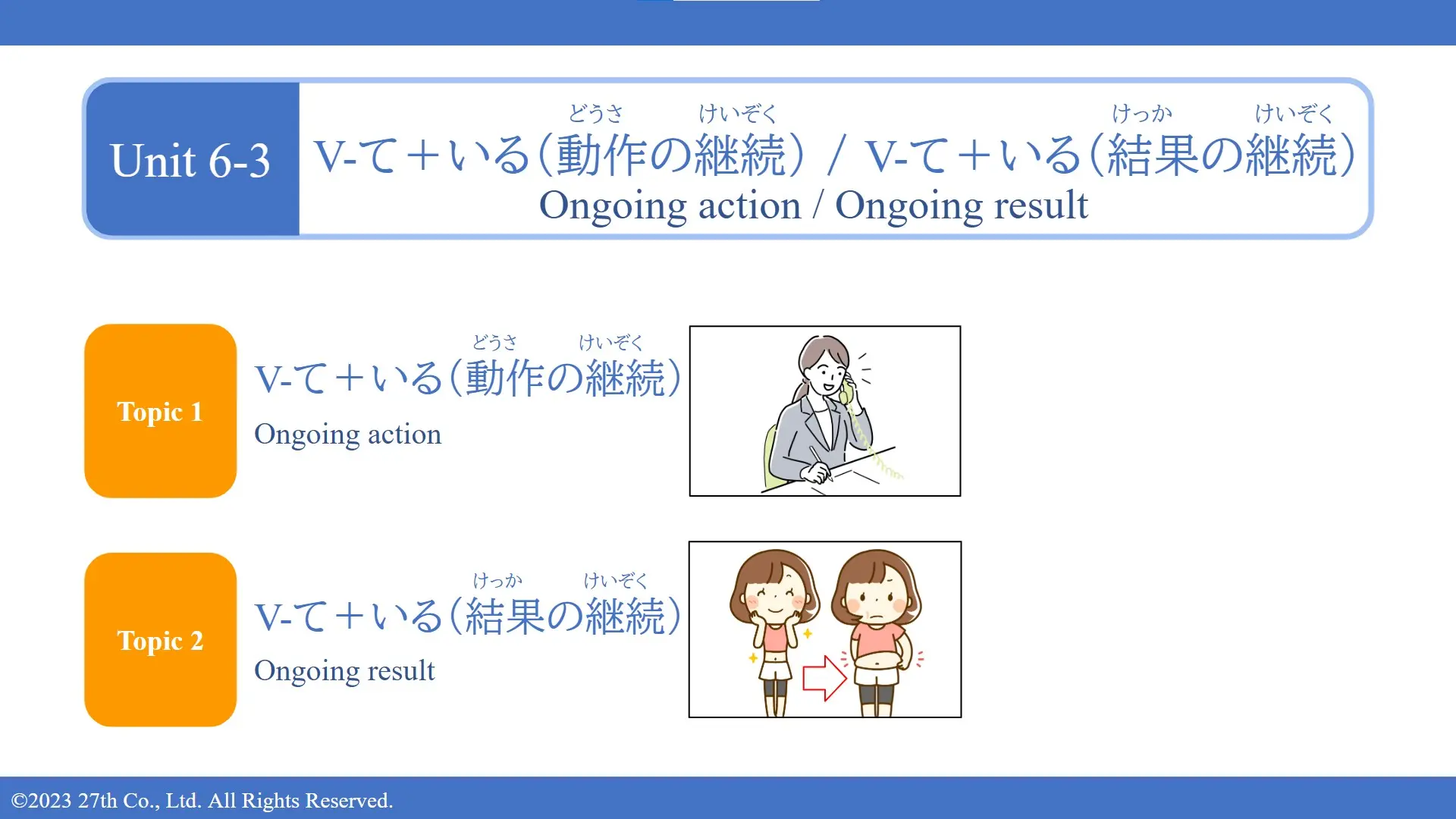
How to Use te iru(〜ている) in Japanese | Ongoing Action vs Ongoing Result Explained
Introduction In English, we often use the “-ing” form to describe ongoing actions like “I am eating” or “She is sleeping.” In Japanese, we use... Read more.
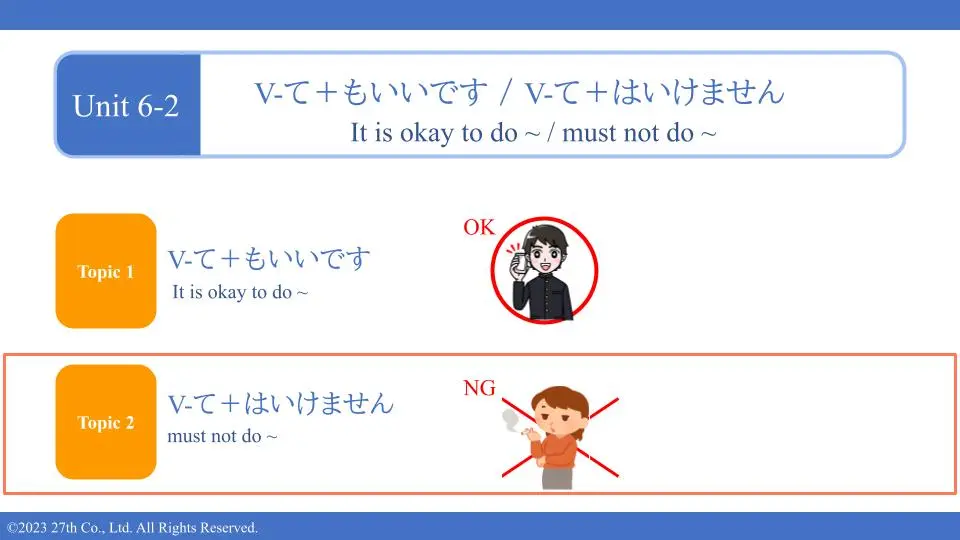
How to Say “You Must Not” in Japanese | Using te-form + wa ikemasen(〜てはいけません)
Introduction Want to say things like: In Japanese, the expression 〜てはいけません is used to clearly prohibit actions. Whether you’re reading a sign in... Read more.