

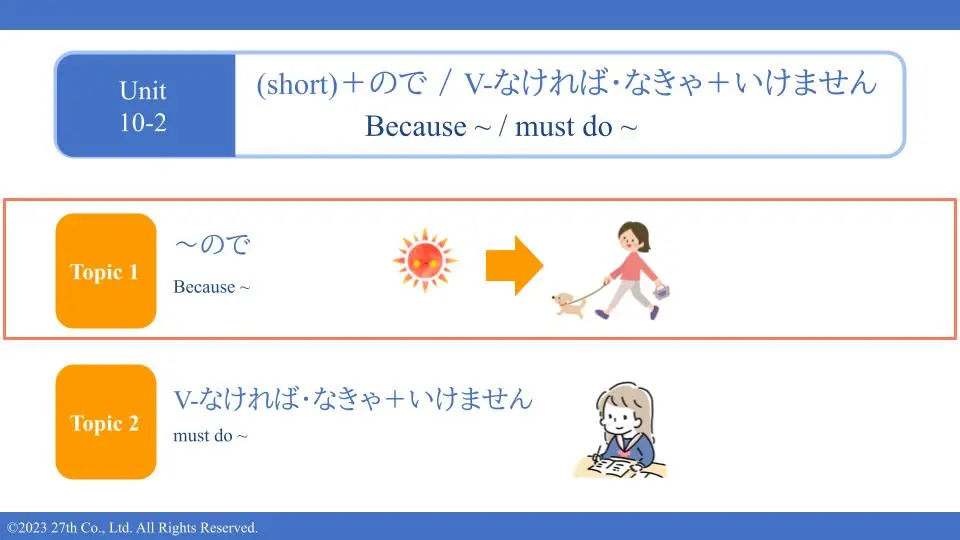
How to Say “Because” in Japanese | Using ~ので for Giving Polite Reasons
Introduction You’ve probably already learned that から can be used to say “because” in Japanese. But did you know that there’s a softer, more polite way... Read more.
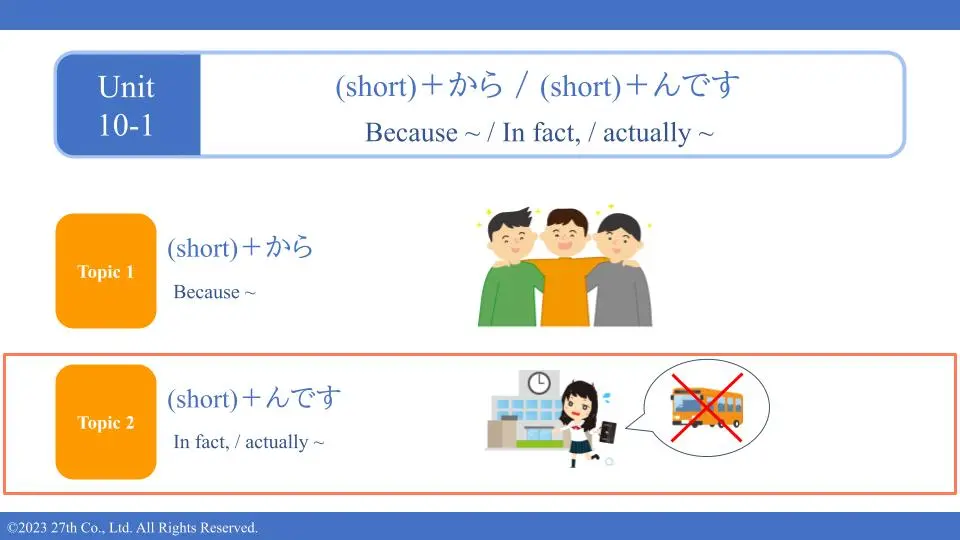
How to Use “~んです” in Japanese | Giving Explanations Naturally
Introduction Have you ever wanted to explain something politely or say “actually…” in Japanese? In English, we might say: In Japanese, the go-to expression... Read more.
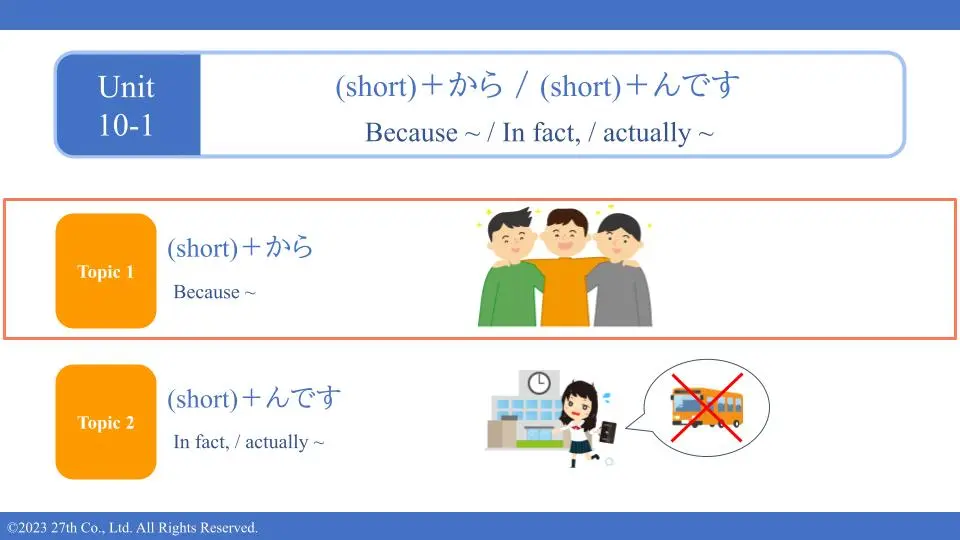
How to Say “Because” in Japanese | Using ~から with Short Form Verbs, Adjectives, and Nouns
Introduction Want to say things like “Because I’m tired,” “Because it’s cold,” or “Because I have an exam” in Japanese? The most natural and useful... Read more.
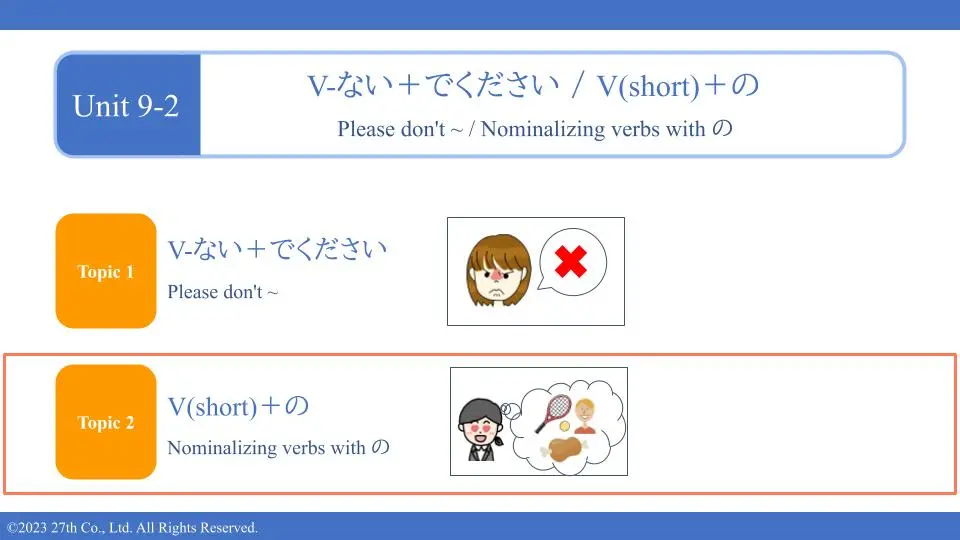
How to Say “Doing Something” in Japanese | Using Verb + の to Nominalize
Introduction In English, we can turn verbs into nouns by adding “-ing”: In Japanese, you can do the same thing using: Verb (short form) + の= “doing something... Read more.
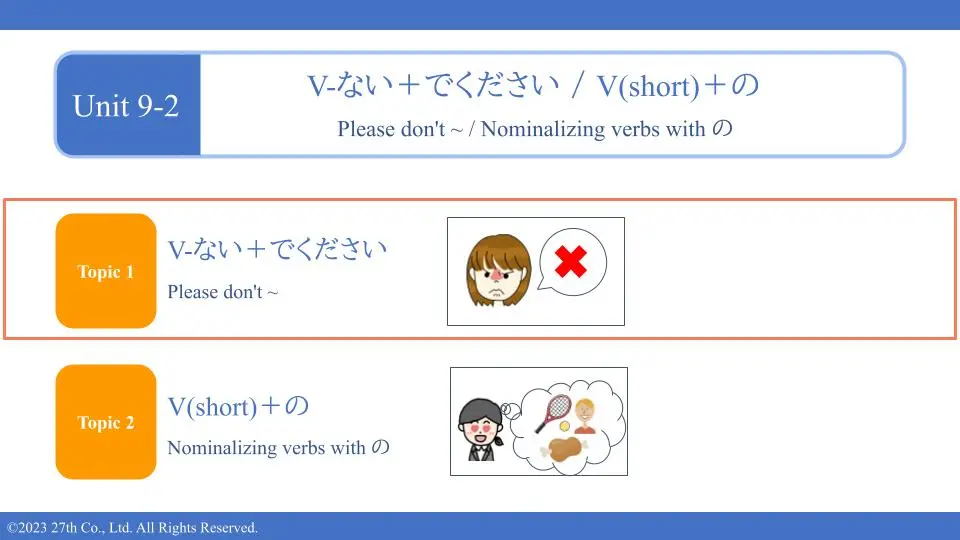
How to Say “Please Don’t” in Japanese | Using nai-de kudasai(〜ないでください)
Introduction What if you want to tell someone politely not to do something in Japanese? Whether it’s “Please don’t smoke,” “Please don’t call,” or... Read more.
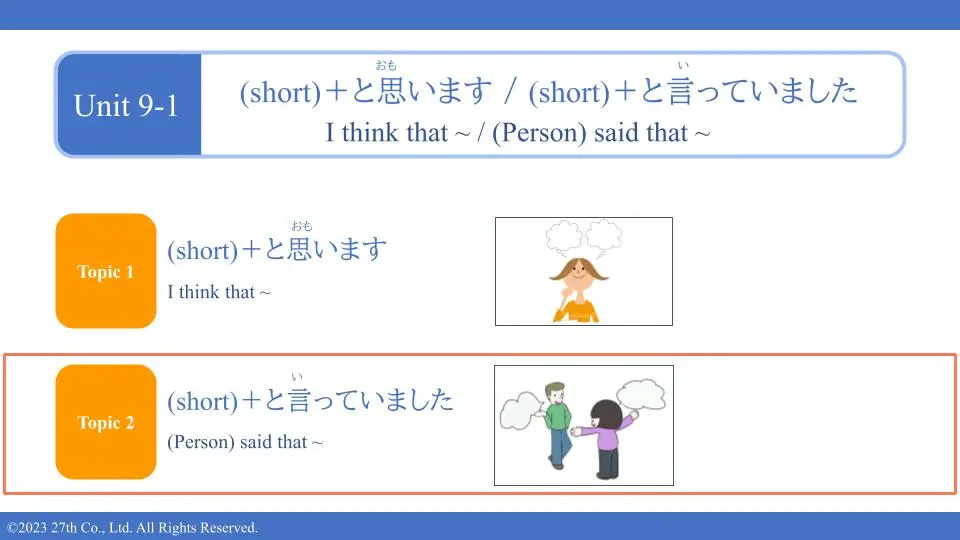
How to Say “Someone Said That…” in Japanese | Using to itteimashita(〜と言っていました)
Introduction Want to report what someone else said in Japanese? Whether it’s “She said she has a part-time job” or “My friend said Japanese is fun,” you’ll... Read more.
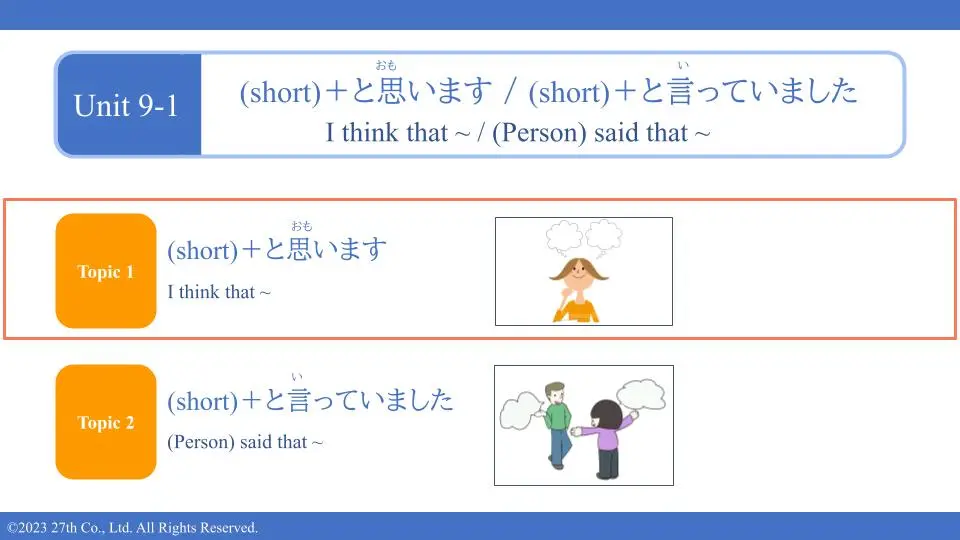
How to Say “I Think That…” in Japanese | Using ~と思います (to omoimasu)
Introduction Want to say what you think in Japanese? Whether it’s “I think it will rain,” “I think this movie is interesting,” or “I don’t think he’s... Read more.
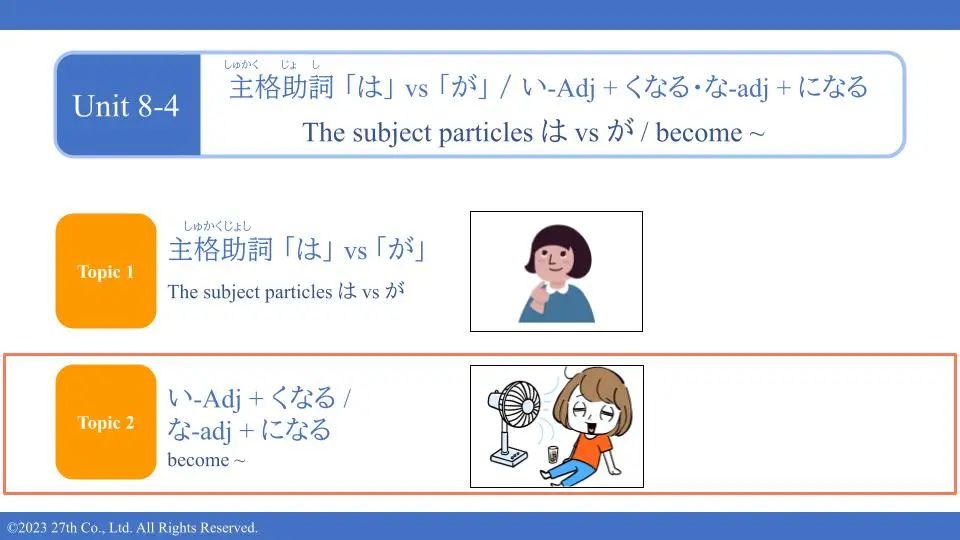
How to Say “Become ~” in Japanese | Using 〜くなる and 〜になる
Introduction In English, we often say things like: But how do you say “become” or “get” in Japanese?In this article, we’ll learn how to express changes... Read more.
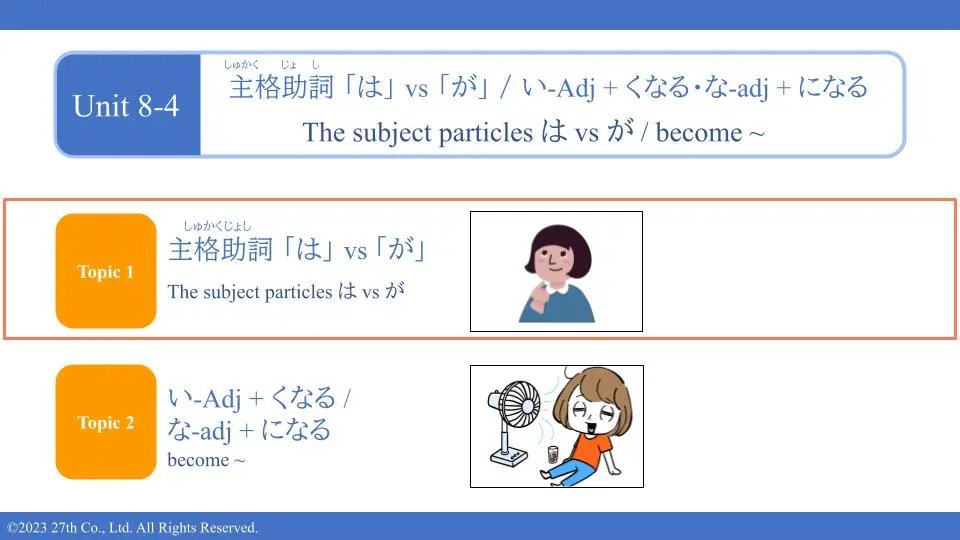
Japanese Particles: How to Distinguish Between wa (は) and ga (が)
Introduction If you’ve started learning Japanese, you’ve likely run into the two most common particles: は (wa) and が (ga). Both can mark the subject of a... Read more.
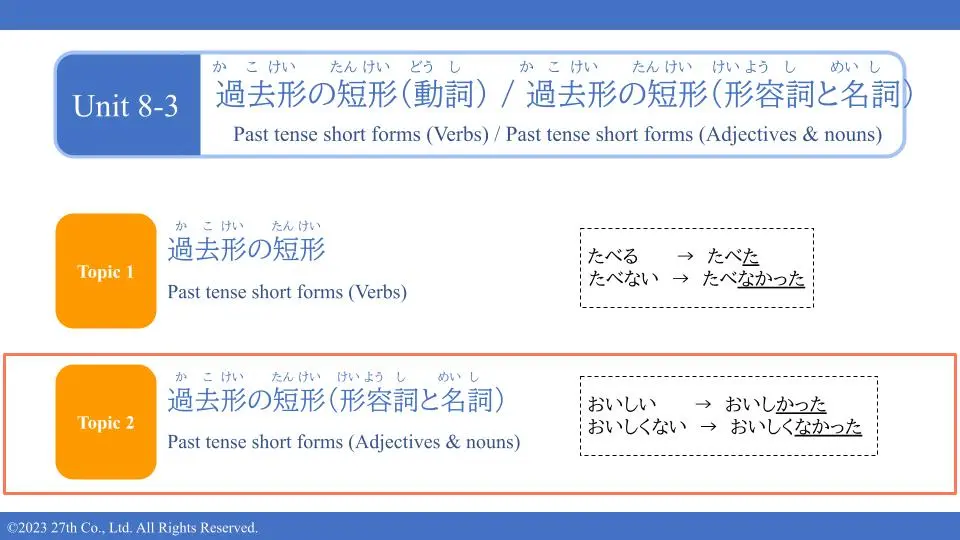
How to Use Japanese Plain Form Past Tense (Short Form) for Adjectives and Nouns
Introduction If you want to sound natural in Japanese when talking about past experiences, you need to know how to use short forms (also called plain forms) —... Read more.