

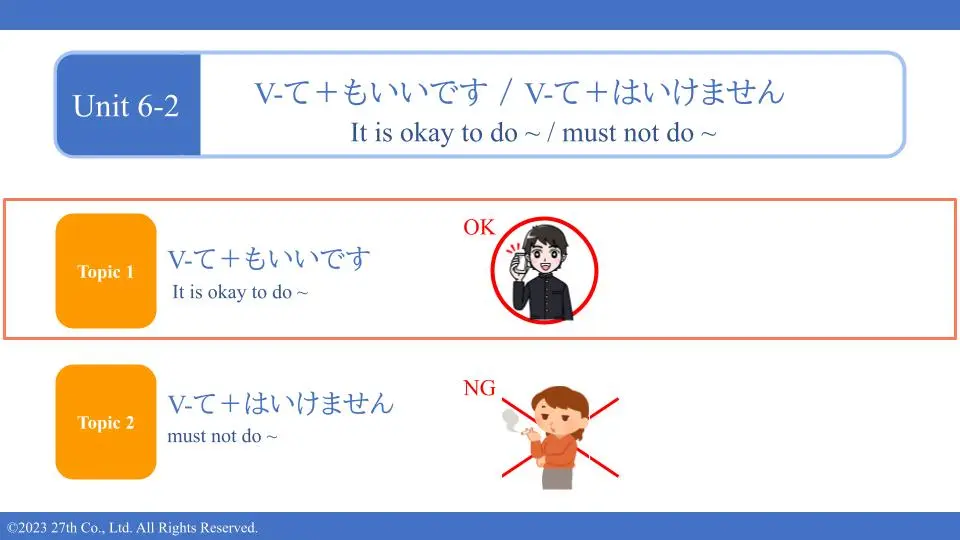
How to Say “It’s Okay to Do” in Japanese | Using te-form + mo ii desu
Introduction Want to ask “May I go to the bathroom?” or say “You can eat here”? In Japanese, the expression V-て+もいいです is used to give permission... Read more.
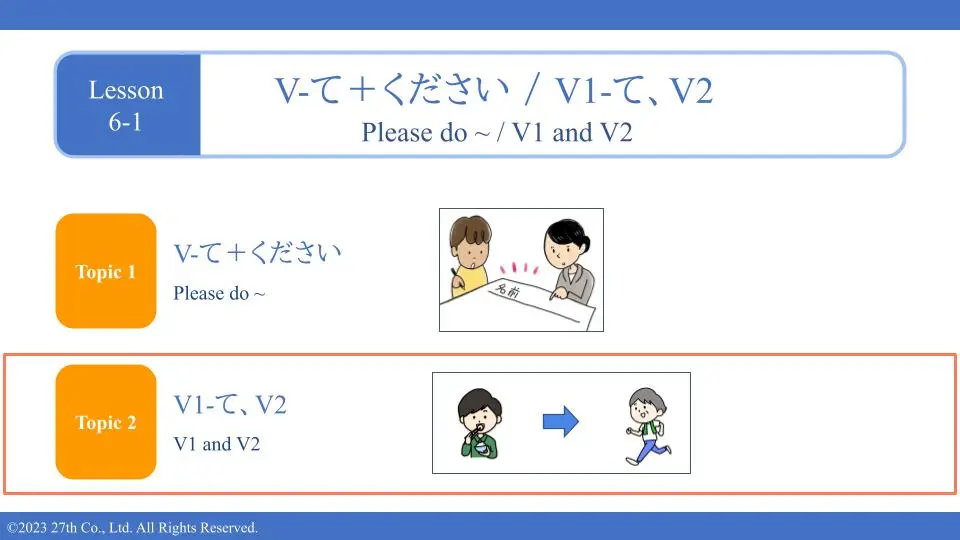
How to Connect Actions in Japanese | Using V1-て、V2 (Do A and then B)
Introduction Want to say: In Japanese, we use the V1-て、V2 structure to connect two or more actions that happen in sequence. It’s one of the most useful grammar... Read more.
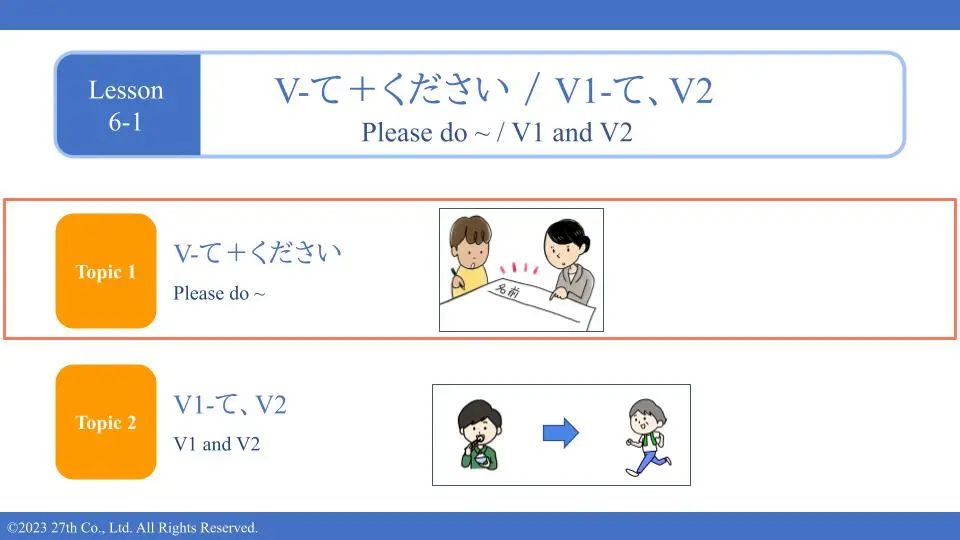
How to Use te kudasai(〜てください) in Japanese | Polite Request Form Explained
Introduction Want to say things like “Please sit down,” “Please open the window,” or “Please speak Japanese”? In Japanese, the polite way to ask someone... Read more.
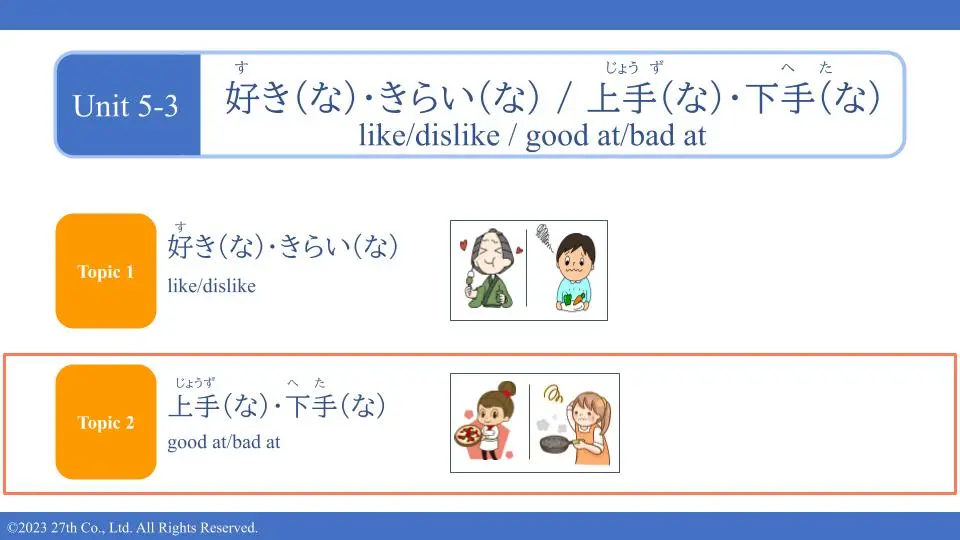
How to Say You’re Good or Bad at Something in Japanese | Using Jouzu(上手)and Heta(下手)
Introduction Want to say “I’m good at cooking” or “I’m bad at drawing” in Japanese? In this article, we’ll learn how to talk about skills and abilities... Read more.
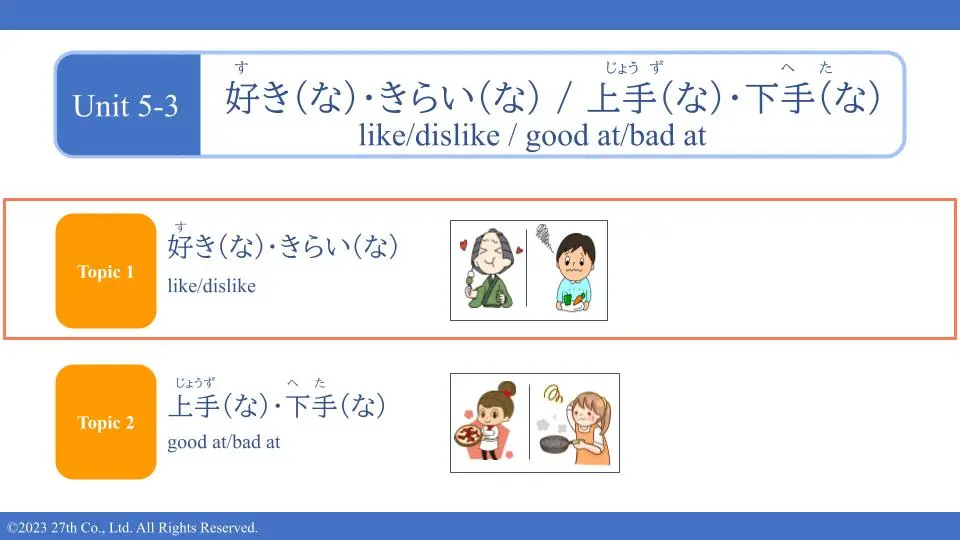
How to Say “I Like” and “I Don’t Like” in Japanese | Using Suki(すき)and Kirai(きらい)
Introduction Want to say “I like sushi” or “I don’t like vegetables” in Japanese? In this article, we’ll learn how to express likes and dislikes using... Read more.
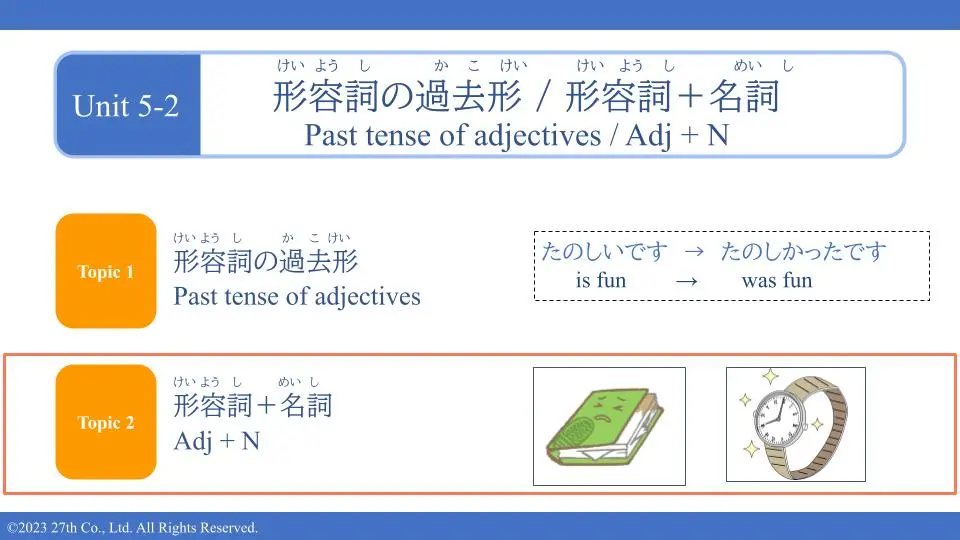
How to Use Adjectives with Nouns in Japanese | Adj + Noun Pattern for Beginners
Introduction Want to say: In Japanese, you can use both い-adjectives and な-adjectives to directly modify nouns. This is one of the simplest and most useful patterns... Read more.
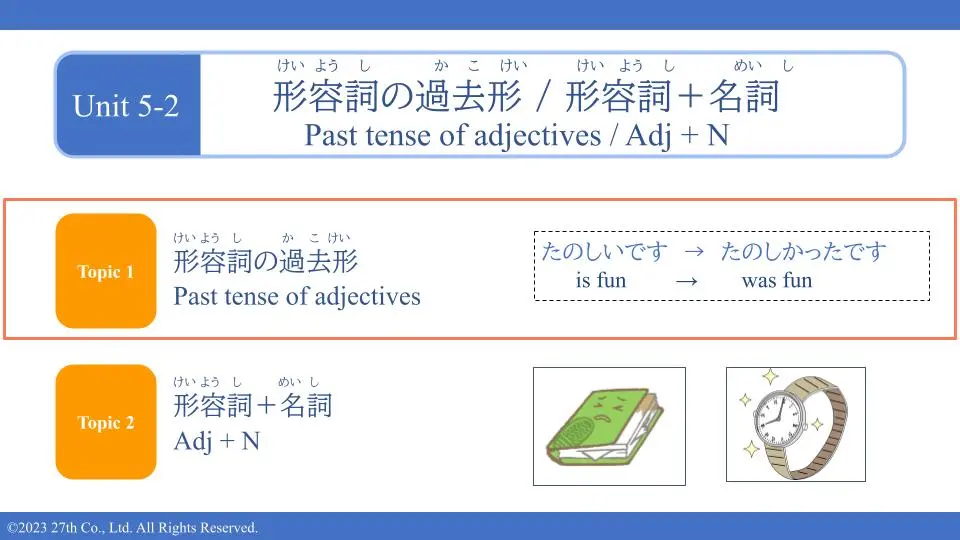
How to Use the Past Tense of Japanese Adjectives | かったです・でした Explained
Introduction Want to say things like: In Japanese, both い-adjectives and な-adjectives have special conjugation patterns for the past tense. In this article,... Read more.
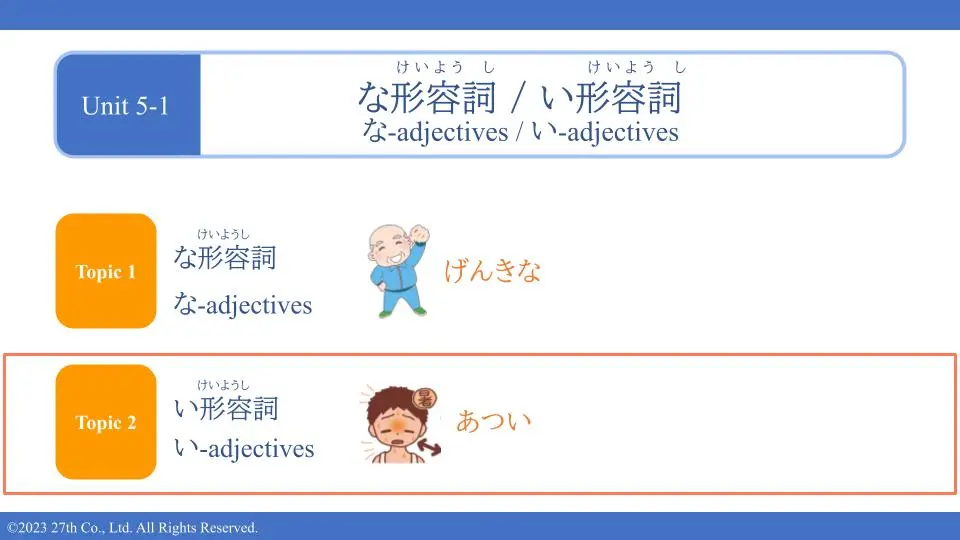
How to Use Japanese i-Adjectives | Learn Oishii(おいしい), Atsui(あつい), and More
Introduction Adjectives are key to expressing your thoughts in any language — and Japanese is no exception. In this lesson, we’ll focus on い-adjectives(い形容詞),... Read more.
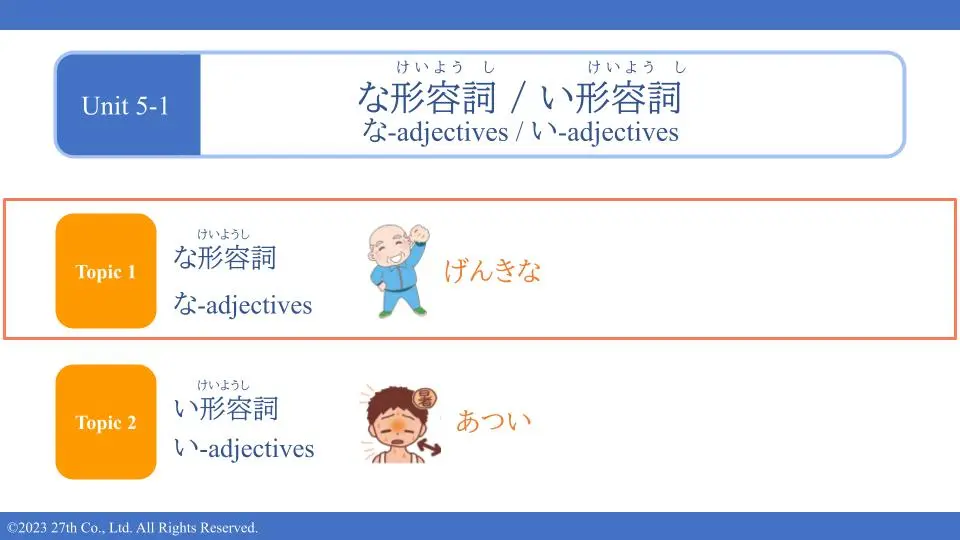
How to Use Japanese na-Adjectives | Describing People and Things with な-Form
Introduction In Japanese, adjectives are essential for describing people, places, and things. But did you know that there are two types of adjectives in Japanese?... Read more.
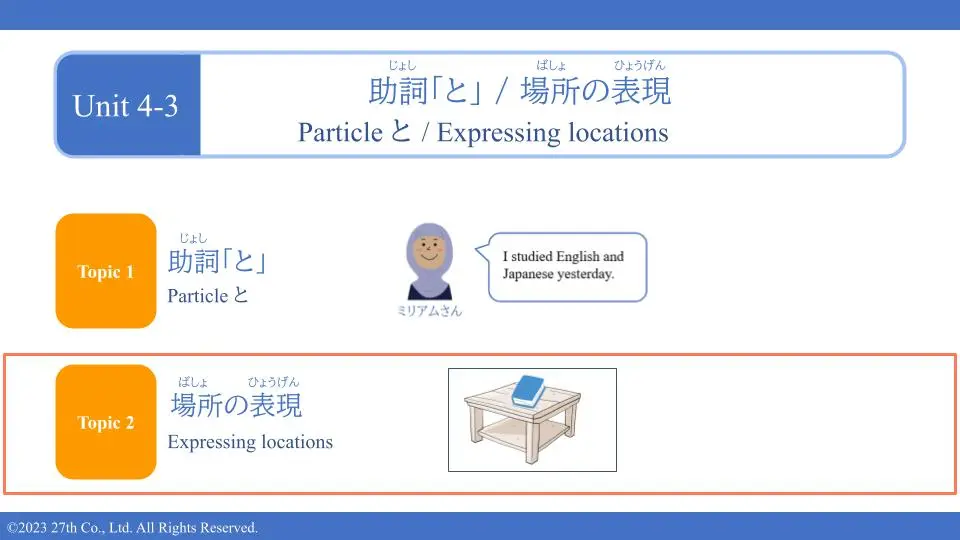
How to Describe Locations in Japanese | Expressing Where Things Are
Introduction Do you want to say things like: In Japanese, we use special location words along with the particle に to describe where things are. In this guide,... Read more.