
Video
Let’s watch this short video for a quick overview.
Source: gokigen japanese official YouTube Channel
Introduction
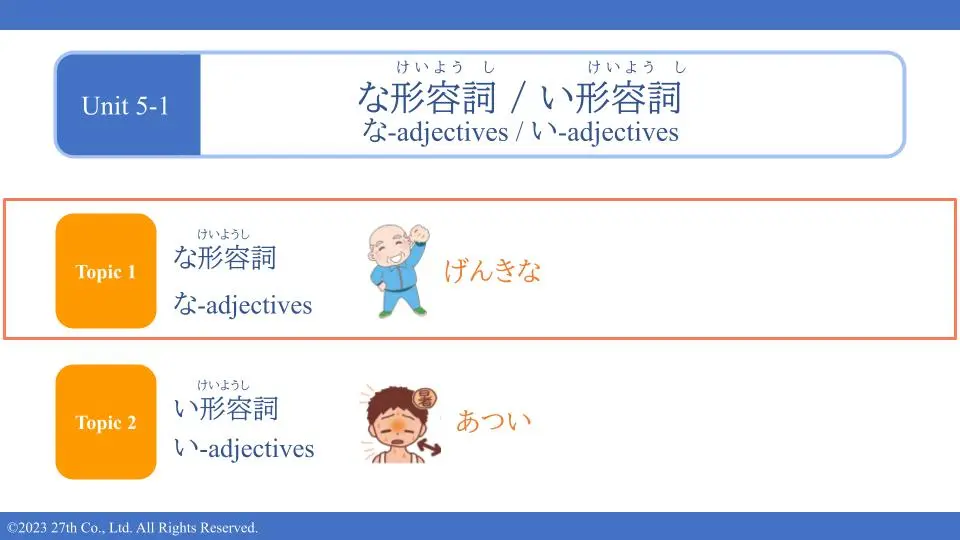
Adjectives are key to expressing your thoughts in any language — and Japanese is no exception. In this lesson, we’ll focus on い-adjectives(い形容詞), a group of words that end with い and describe what something is like.
By the end of this guide, you’ll know how to:
✔ Identify i-adjectives
✔ Make both positive and negative sentences
✔ Use the correct conjugation rules
✔ Avoid common mistakes
✔ Practice with questions and answers
Let’s begin!
What Are い-Adjectives?
い-adjectives always end with the hiragana い (i).
Unlike な-adjectives, they don’t need “な“ before nouns and have their own conjugation patterns.
Examples:
| Japanese | English |
|---|---|
| この本は新しいです。 | This book is new. |
| その映画は面白くないです。 | That movie is not interesting. |
| 東京は暑いですね。 | It’s hot in Tokyo, isn’t it? |
💡 Many i-adjectives describe feelings, appearance, temperature, or impressions.
How to Conjugate い-Adjectives
Affirmative
Just add です to the base i-adjective.
| Adjective | Sentence | Meaning |
|---|---|---|
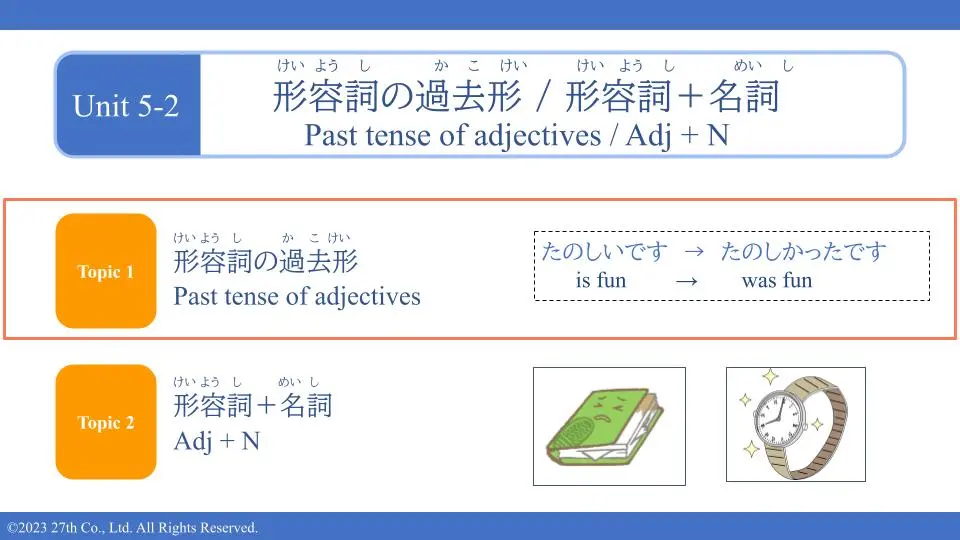
| 楽しい | 今日は楽しいです。 | Today is fun. |
| おいしい | このケーキはおいしいです。 | This cake is delicious. |
Negative
To make a negative sentence, replace い with:
- くないです (colloquial polite)
- くありません (more formal)
| Adjective | Negative Form | Example |
|---|---|---|
| おいしい | おいしくないです | なっとうはおいしくないです。 Natto is not tasty. |
| 楽しい | 楽しくありません | 勉強は楽しくありません。 Studying is not fun. |
Special Case: いい → よくない
The adjective いい(good) is irregular.
| Positive | Negative |
|---|---|
| いいです | よくないです(not: いくない) |
This irregular rule also applies to compound adjectives that include いい, such as かっこいい (cool, good-looking).
| Positive | Negative |
|---|---|
| かっこいいです | かっこよくないです(not: かっこいくない) |
However, be careful! The adjective かわいい (cute) looks similar but is actually a regular i-adjective.
→ Negative form: かわいくない, not かわよくない.
Common い-Adjectives
| Japanese | Meaning |
|---|---|
| あたらしい(新しい) | new |
| ふるい(古い) | old |
| あつい(暑い) | hot (weather) |
| さむい(寒い) | cold (weather) |
| おいしい | delicious |
| たのしい(楽しい) | fun |
| いい | good |
Practice: Affirmative and Negative
Convert these into both forms:
| Base | Affirmative | Negative |
|---|---|---|
| あつい (hot) | 暑いです | 暑くないです / 暑くありません |
| さむい (cold) | 寒いです | 寒くないです / 寒くありません |
| ふるい (old) | 古いです | 古くないです / 古くありません |
| おいしい (delicious) | おいしいです | おいしくないです / おいしくありません |
| たのしい (fun) | 楽しいです | 楽しくないです / 楽しくありません |
| いい (good) | いいです | よくないです / よくありません |
Q&A Practice
Try answering these using the correct i-adjective form:

日本の食べ物はおいしいですか。
Is Japanese food delicious?

はい、おいしいです。/いいえ、おいしくないです。
Yes, it is delicious. / No, it is not delicious.
海外旅行は楽しいですか。
Is traveling abroad fun?

はい、楽しいです。/いいえ、楽しくないです。
Yes, it is fun. / No, it is not fun.
その映画は面白いですか。
Is that movie interesting?
はい、面白いです。/いいえ、面白くないです。
Yes, it is interesting. / No, it is not interesting.
東京は暑いですか。
Is Tokyo hot?
はい、暑いです。/いいえ、暑くないです。
Yes, it is hot. / No, it is not hot.
FAQ – Frequently Asked Questions
- QHow do I know if an adjective is い-type or な-type?
- A
Check the ending. If it ends in い, it’s probably an い-adjective, but be aware of common exceptions like きれい or ゆうめい which are な-adjectives. If it doesn’t end in い, it’s a な-adjective. When in doubt, always check a dictionary!
- QCan I use い-adjectives before nouns?
- A
Yes! Example:
- おいしいラーメン = delicious ramen
- 古い本 = old book
- QIs かっこいい an い-adjective?
- A
Yes, and its negative form is かっこよくないです (not: ❌かっこいくないです). Be careful of this irregular reading!
Conclusion
You’ve just learned:
✅ What i-adjectives are
✅ How to make them negative
✅ How to answer and ask questions with them
✅ One irregular adjective: いい → よくない
🎯 Now try writing 3 sentences using different i-adjectives!