

How to Describe Locations in Japanese | Expressing Where Things Are
Introduction Do you want to say things like: In Japanese, we use special location words along with the particle に to describe where things are. In this guide,... Read more.
How to Use the Japanese Particle To(と) | “And”, “With”, and Quoting Speech
Introduction What do the following have in common? They all use the Japanese particle と(to)! This tiny word has several powerful uses in Japanese. In this... Read more.
How to Use Adverbs in Japanese | Frequency, Duration, and Quantity
Introduction Want to say “I always eat breakfast,” “I study Japanese for three hours,” or “I don’t have money at all”? Then you need to learn Japanese... Read more.
How to Use the Past Tense of Japanese Verbs | Learn Mashita(ました) and Masen Deshita(ませんでした)
Introduction How do you say “I went to the library,” “I didn’t eat lunch,” or “I studied Japanese yesterday” in Japanese? To talk about something that... Read more.
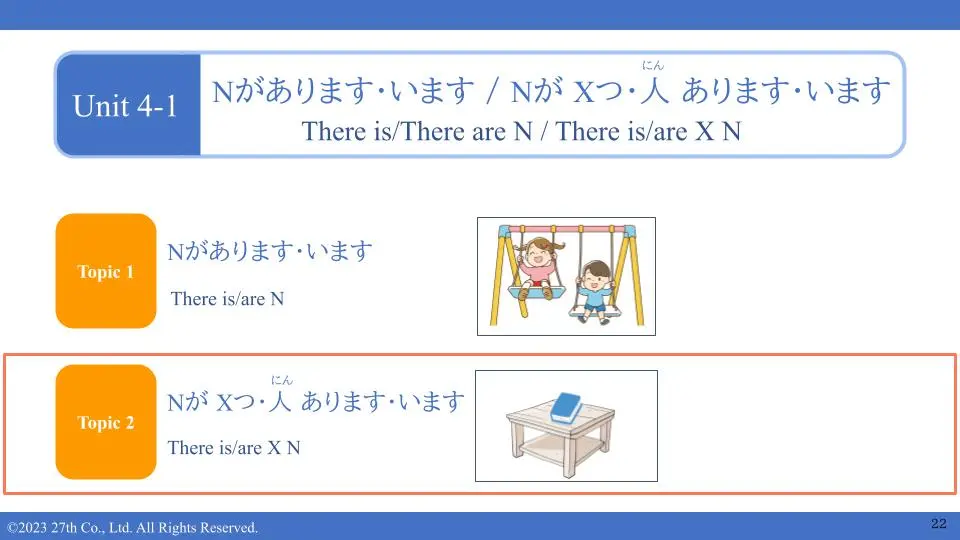
How to Count People and Things in Japanese | Using Arimasu(あります) and Imasu(います) with Numbers
Introduction Want to say “There are two kids in the park” or “I have three brothers”?In Japanese, saying how many people or things there are involves a little... Read more.
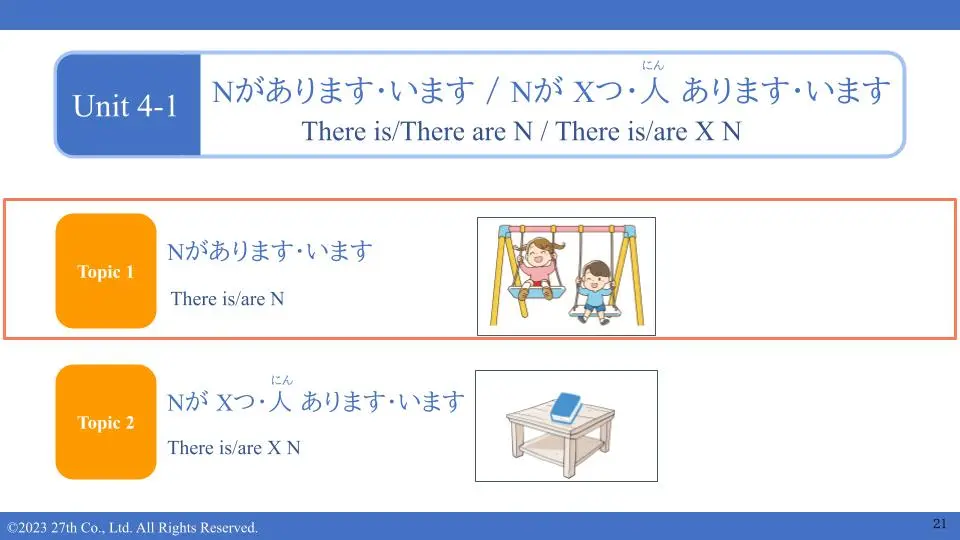
How to Say “There is / There are” in Japanese | Learn Arimasu(あります) and Imasu(います)
Introduction Want to say “There is a cat in the park” or “There’s a hospital in my town”?In Japanese, you can express the existence of people, animals,... Read more.
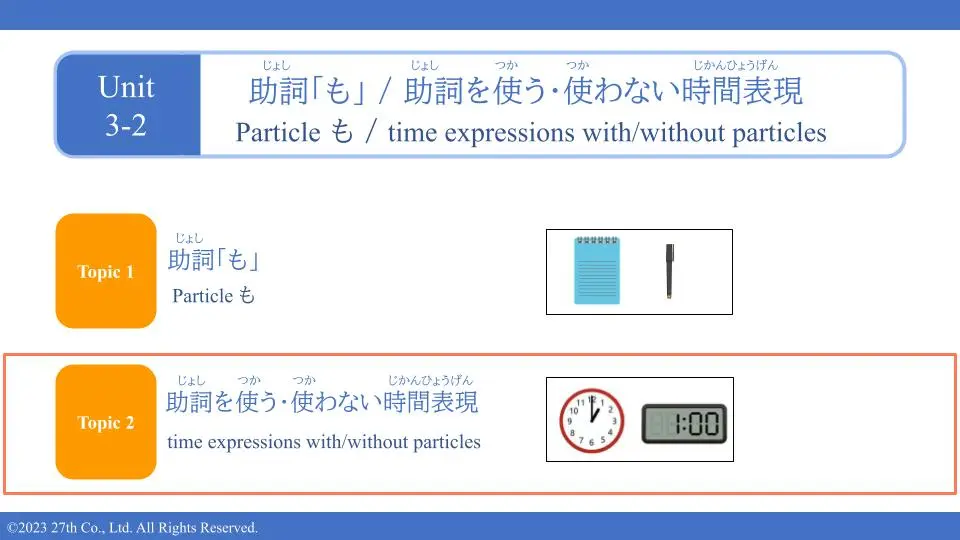
How to Use Time Expressions in Japanese | With and Without Particles
Introduction When do you wake up? What time do you study? How long does the café stay open? In Japanese, time expressions are essential for daily conversation —... Read more.
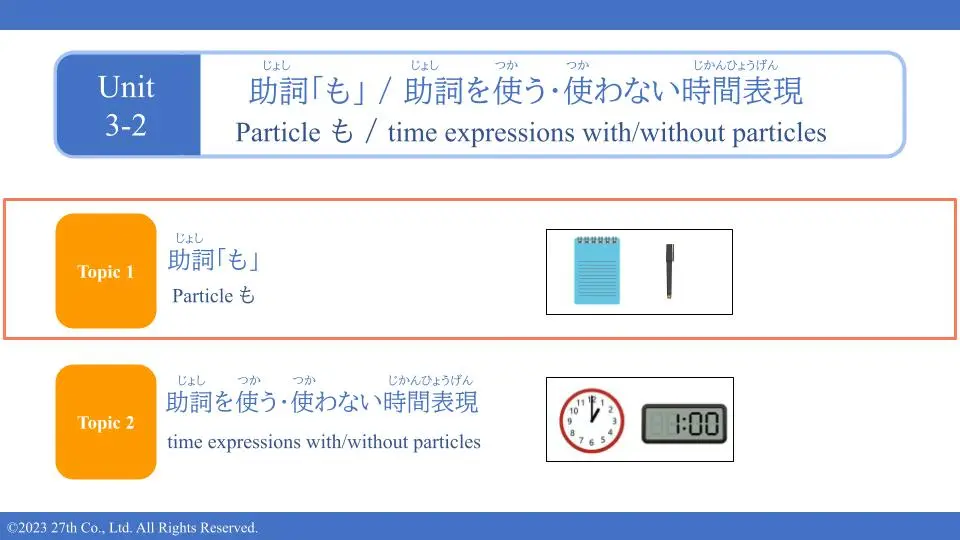
How to Use the Japanese Particle “も” | Learn How to Say “Also” and “Too” in Japanese
Introduction If you want to say things like “Me too,” “I’ll go as well,” or “She also studies Japanese,”you’ll need one of the most common and friendly... Read more.
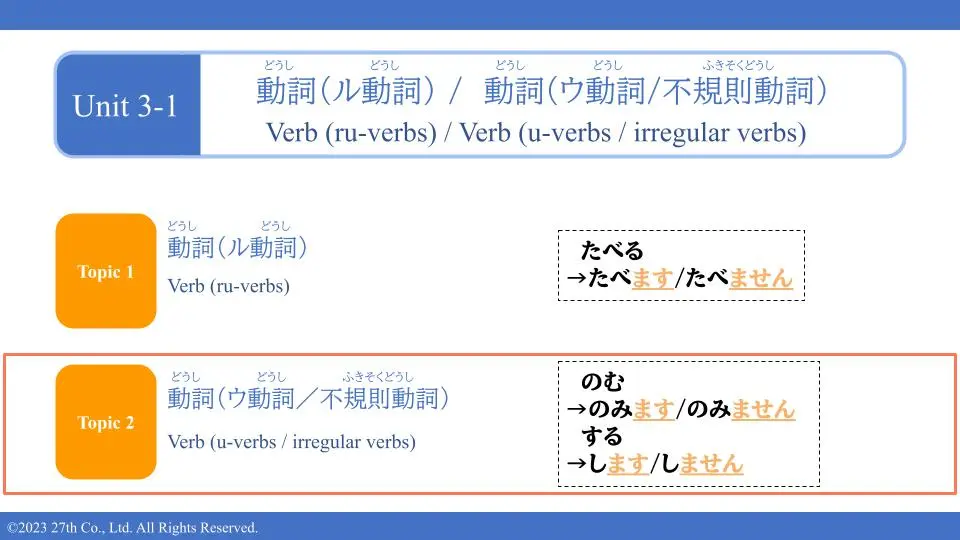
Learn Japanese Irregular Verbs | How to Use する(to do)and くる(to come)
Introduction Most Japanese verbs follow regular patterns — either as ru-verbs or u-verbs. But there are a couple of important exceptions you absolutely need to... Read more.
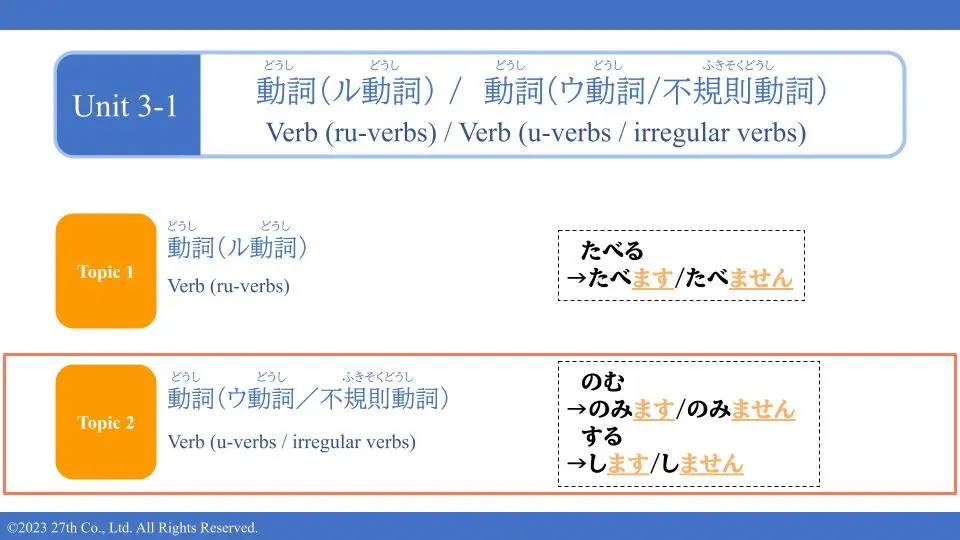
Learn Japanese U-Verbs: Conjugation Patterns and Examples for Beginners
Introduction In our last article, we learned about ru-verbs, the most regular and beginner-friendly verbs in Japanese.Now it’s time to move on to the second big... Read more.